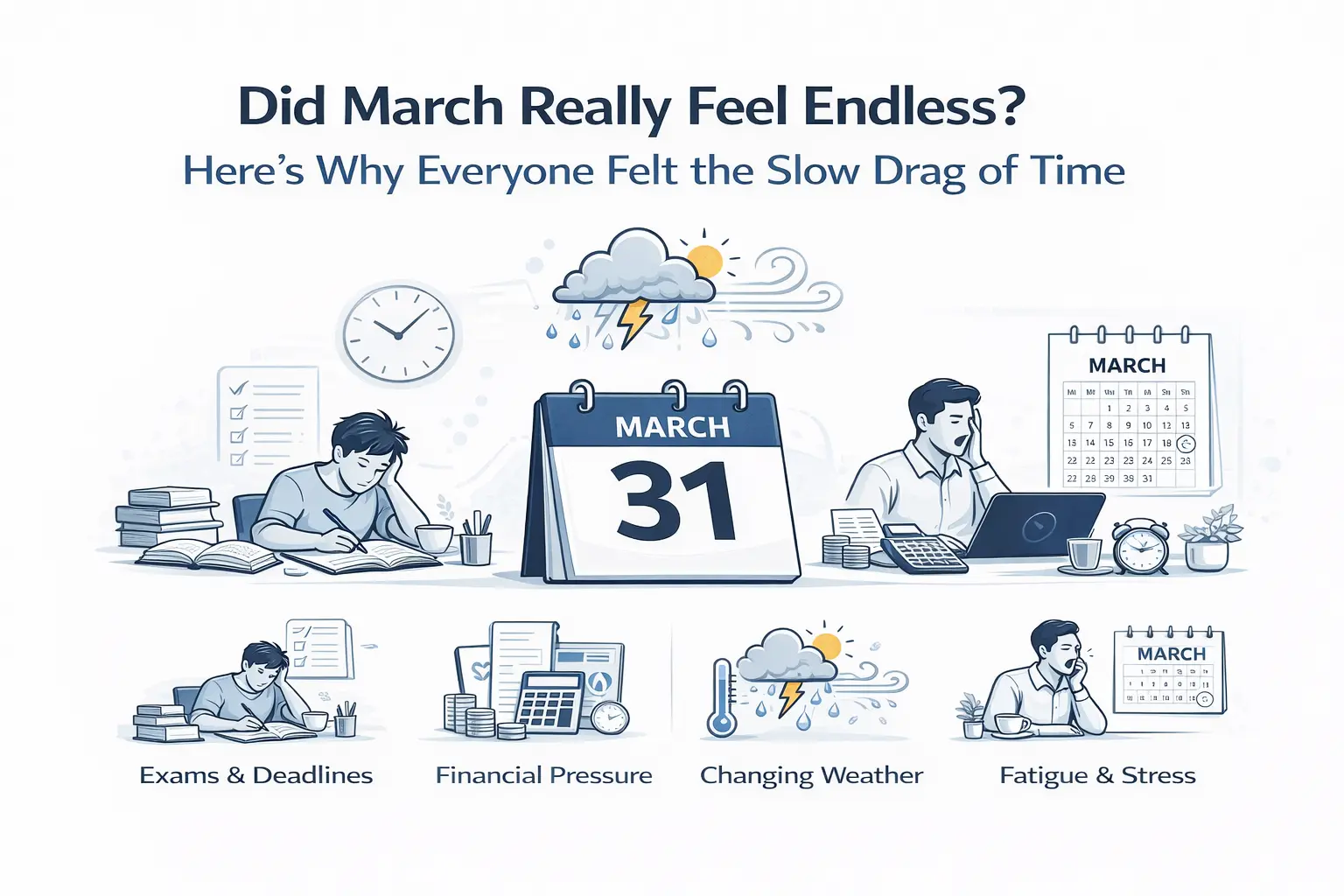
Why did March feel like it stretched forever—even though it has the same 31 days as other months?
You weren’t imagining it. For many people, March didn’t just pass—it dragged.
From students counting days to exams to professionals juggling financial deadlines, something about this month felt unusually heavy. The calendar didn’t change. But our experience of time clearly did.
Introduction: When Time Stops Flowing
March sits in a strange position. It’s not the fresh start of January or the festive buzz of December. It’s a transition month—quiet, demanding, and often overwhelming.
And that’s exactly why it feels longer.
For students across India, March is peak exam pressure 2026 season. For businesses, it marks the financial year-end. For many workers, it’s a sprint to close targets before April resets everything.
Time didn’t slow down.
Life just got denser.
Main Explanation: What’s Happening—and Why
The reason March feels longer is not about days—it’s about mental load and time perception.
Psychologists have long observed a simple pattern:
When your brain processes more stress and decisions, time feels stretched.
March packs multiple high-stakes events into a short span:
Final exams and academic deadlines
Financial year-end reporting
Job evaluations and performance reviews
Changing weather patterns that disrupt routine
Each of these increases cognitive pressure. When your brain is constantly alert, it stops “skipping moments.” Instead, it records everything in detail—making time feel slower.
There’s also a subtle seasonal shift. In many parts of India, March brings rising heat and unpredictable weather. Sleep quality drops. Energy dips. Fatigue builds.
And fatigue has a direct effect on time perception.
A tired brain experiences time differently.
Impact: The Real Effects on People
This isn’t just a feeling—it has real consequences.
Students report higher levels of student stress in India during March than any other month. Anxiety peaks. Sleep cycles break. Focus becomes harder.
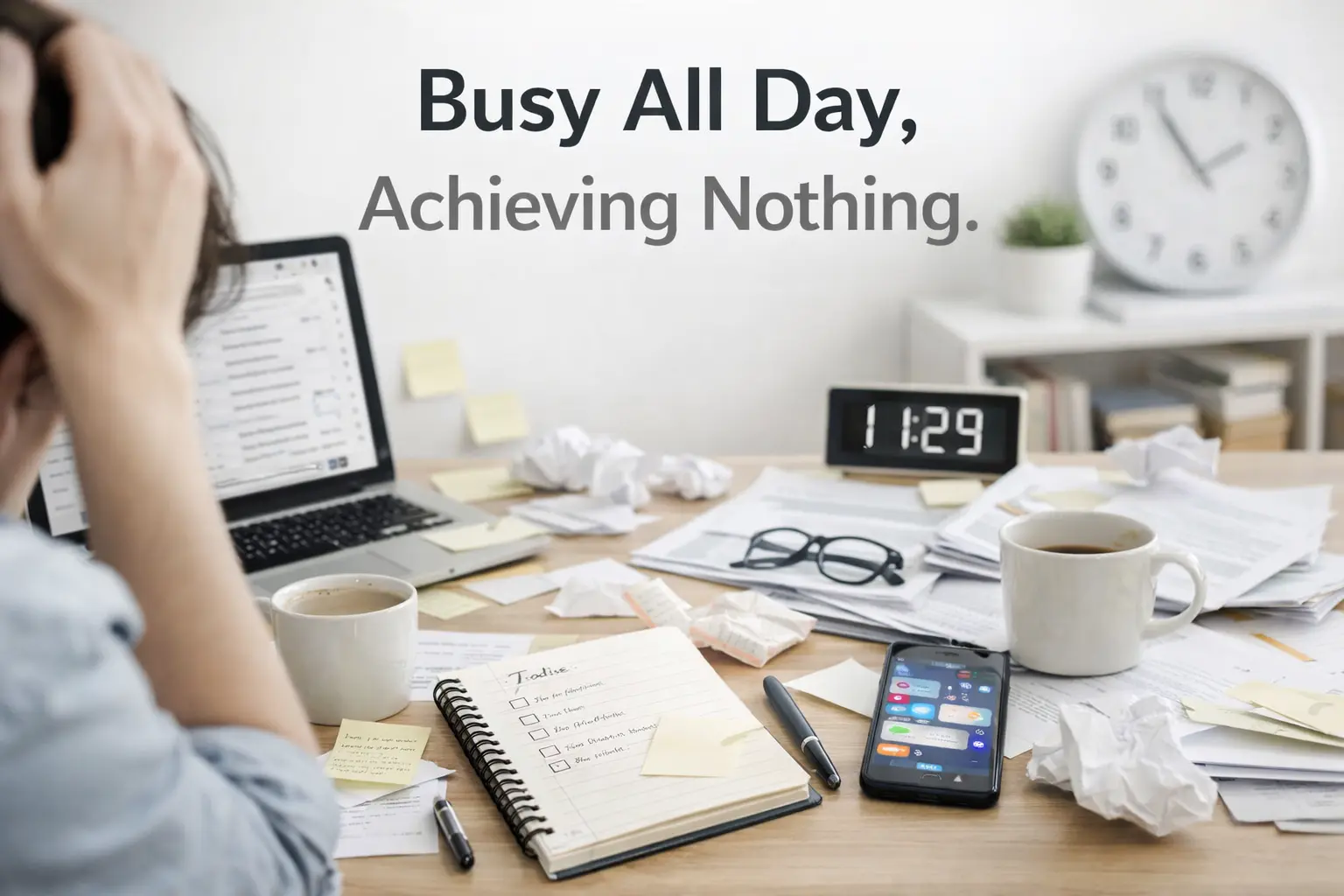
Professionals face a different pressure. Targets, taxes, and deadlines converge. Financial anxiety rises, especially for small business owners trying to close the year strong.
And then there’s the emotional side.
March often feels like a test—not just of skill, but of endurance.
“It’s not the work that exhausts you. It’s the constant feeling that something important is always pending.”
Socially, people withdraw. Plans get postponed. Conversations become shorter, more functional.
Even weekends don’t feel like breaks anymore.
Just pauses.
Insight: The Uncomfortable Truth About Time
Here’s the deeper reality:
March feels longer because we are living more intensely—but not necessarily more meaningfully.
We’ve designed systems—academic, corporate, financial—that compress pressure into specific periods. March is one of those pressure points.
And pressure changes perception.
“The more you rush through life, the slower it feels.”
“Deadlines don’t just measure work. They reshape how we experience time.”
“Most people are not behind on time—they are overloaded with expectations.”
There’s also a modern twist. Compared to a decade ago, our attention is more fragmented. Notifications, constant updates, and digital distractions make focused work harder. So tasks take longer. Mental fatigue builds faster.
A subtle trend has emerged:
People aren’t working more hours—they are experiencing more mental interruptions per hour.
That alone can make a month feel endless.
A Small but Real Observation
You probably checked the date more often in March than in February.
That’s not random. It’s a sign your brain was waiting—for relief, for completion, for the month to end.
Conclusion: It Was Never About March
March didn’t change.
We did.
We packed it with pressure, expectations, and deadlines—then wondered why it felt so long. The truth is simple: when life becomes a checklist of urgent tasks, time stops flowing and starts dragging.
And maybe that’s the real lesson.
If every month feels like March, the problem isn’t time—it’s how we’re living inside it.