Buy a Home or Live on Rent Based on Your Salary: A Practical Financial Decision
Introduction
Is buying a house a smart move based on your salary or is renting a better option.
This question has become more relevant than ever in today’s financial environment. Rising property prices changing job patterns and increasing lifestyle expectations have made this decision more complex.
Many people assume that owning a home is always the right choice. But the reality is more nuanced.
The right decision depends on your income stability financial goals and long term priorities.
Understanding the Core Difference
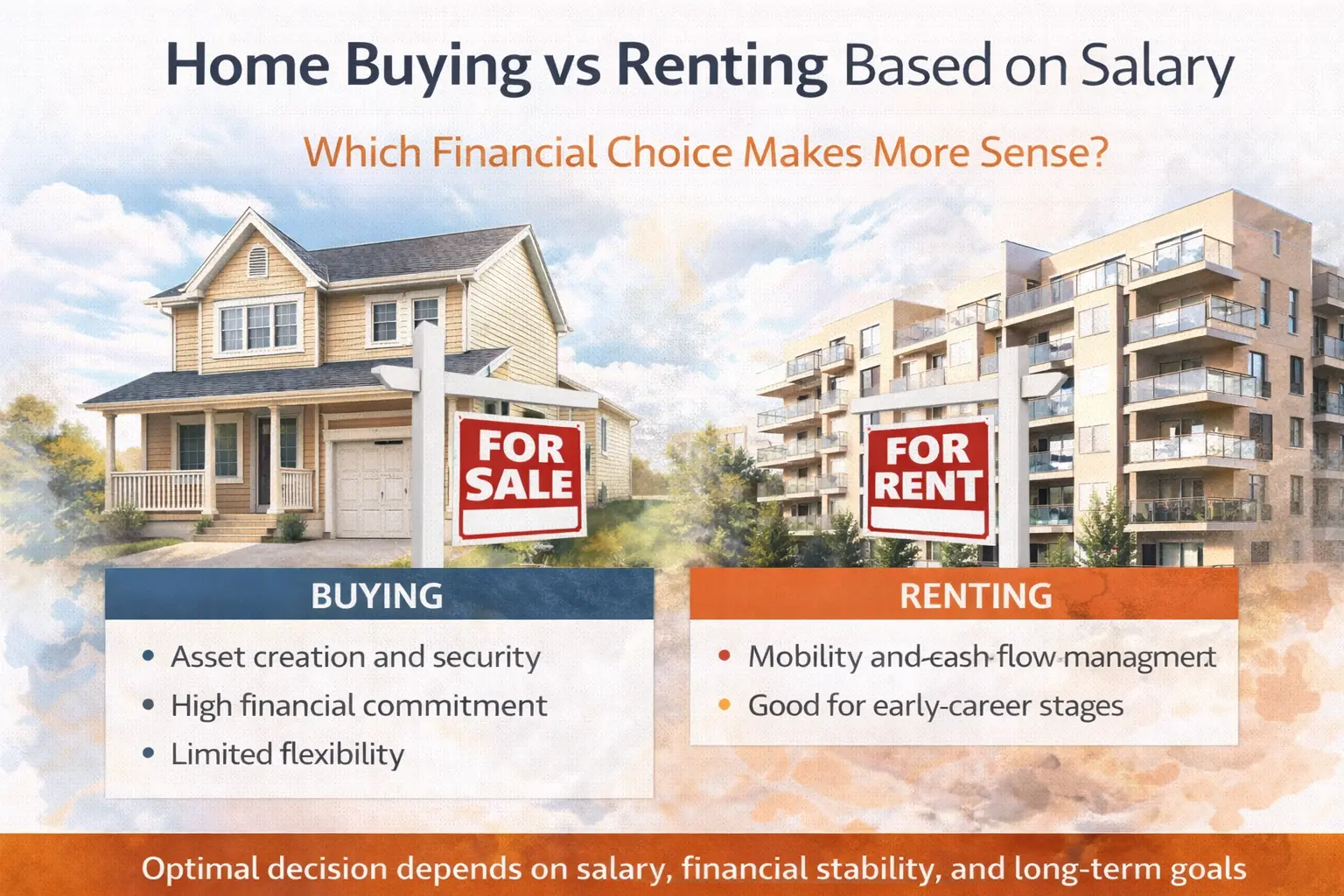
Buying a home is a long term financial commitment. It involves a large upfront cost and ongoing expenses such as EMIs maintenance taxes and interest payments.
Renting on the other hand offers flexibility. It requires lower initial investment and allows easier relocation.
Both options have advantages and limitations.
The key is alignment with your financial situation.
Buying a Home Based on Salary
If your salary is stable and predictable buying a home can be a strong financial decision.
Home ownership builds an asset over time. Every EMI contributes towards ownership. It also provides a sense of security and stability.
However the biggest mistake people make is stretching their budget.
Financial experts often suggest that your EMI should not exceed 30 to 40 percent of your monthly income.
If your salary cannot comfortably support this range buying a house may create financial pressure.
Cost Breakdown Table
Factor | Buying a Home | Renting |
|---|---|---|
Initial Cost | High down payment | Low deposit |
Monthly Expense | EMI and maintenance | Rent |
Flexibility | Low | High |
Long Term Asset | Yes | No |
Financial Risk | Higher | Lower |
Mobility | Limited | Easy relocation |
When Buying Makes Sense
Buying is a good option when you have stable income long term job security and clear financial planning.
It is also beneficial if you plan to stay in one city for many years.
Real estate tends to appreciate over time in strong markets. This creates wealth in the long run.
But buying only for emotional reasons without financial readiness can lead to stress.
When Renting Is a Better Choice
Renting is often underestimated.
It provides flexibility especially for professionals who may need to relocate for career growth.
It also allows better cash flow management. Instead of locking money into property you can invest in other financial instruments such as mutual funds stocks or business opportunities.
For someone early in their career renting can be a smarter strategy.
Real World Observation
Many young professionals in cities choose to rent despite having the ability to buy.
Why.
Because they value flexibility and liquidity more than ownership at that stage.
They prefer to invest their surplus income rather than commit to long term EMIs.
The Hidden Costs of Buying
Buying a house involves more than just EMI.
There are registration charges maintenance costs property taxes and interest payments over time.
In many cases the total amount paid over 20 years can be significantly higher than the original property price.
This is often overlooked.
The Psychological Factor
Owning a home provides emotional satisfaction.
It creates a sense of belonging and achievement.
But financial decisions should not be driven only by emotions.
A house should support your life not control it.
A Simple Financial Perspective
If your salary allows comfortable EMI payments while maintaining savings and investments buying can be a good decision.
If buying forces you to compromise on lifestyle savings or career opportunities renting is the better option.
One Important Question
Are you buying because you are ready or because society expects you to.
Long Term Wealth Comparison
Approach | Outcome |
|---|---|
Buying early with low savings | High pressure low flexibility |
Renting and investing | Higher liquidity potential wealth growth |
Buying with strong financial base | Stable asset and security |
The Bigger Insight
The decision is not about rent versus buy.
It is about financial clarity versus financial pressure.
One powerful line explains this clearly.
A home should be a milestone not a burden.
Conclusion
There is no universal answer to whether buying a home or renting is better.
The right choice depends on your salary financial stability career plans and risk tolerance.
Buying is beneficial when you are financially prepared and committed to long term stability.
Renting is practical when you prioritize flexibility and liquidity.
The smartest decision is not the most popular one.
It is the one that aligns with your financial reality.