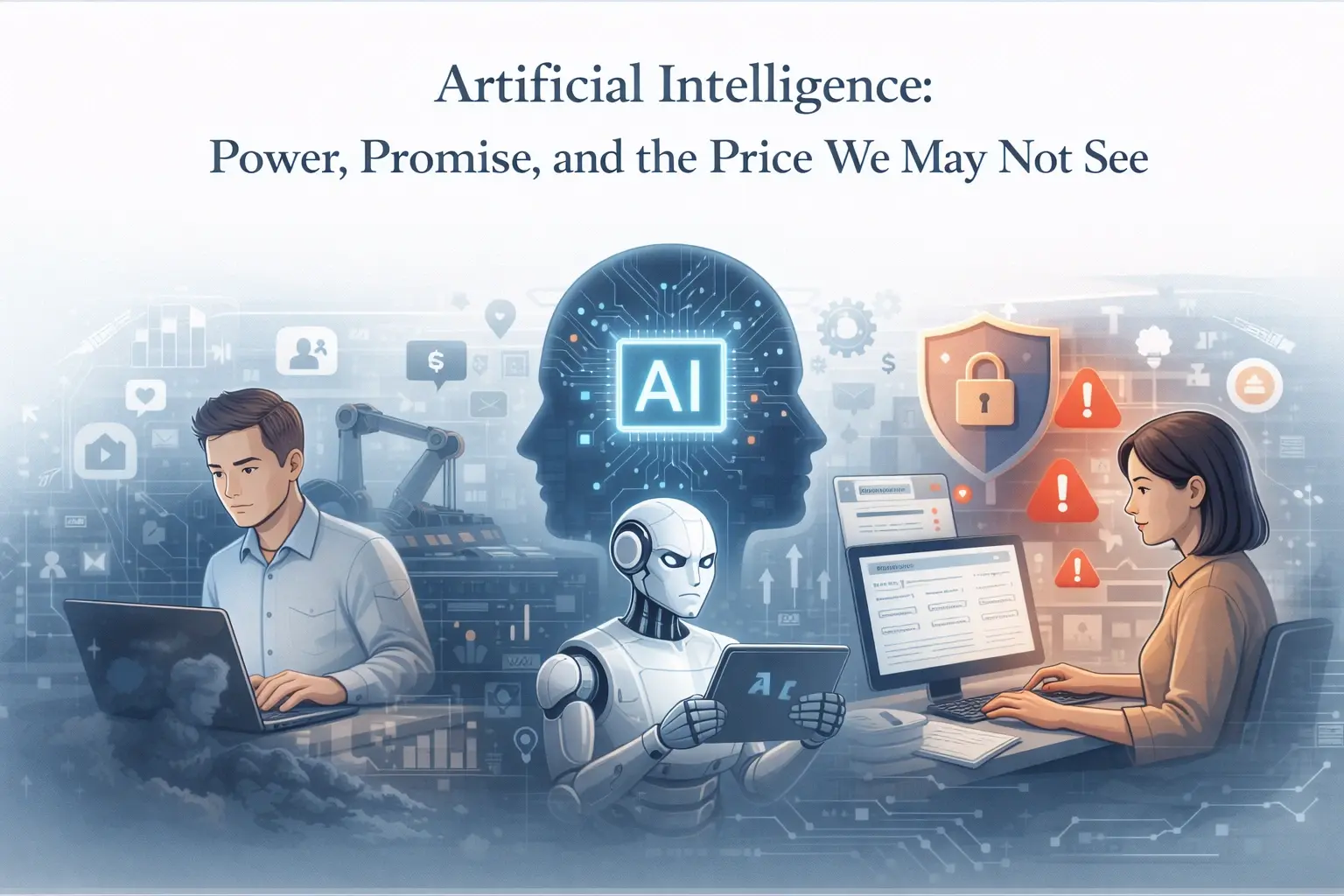
It sounds dramatic. But look around. From the way we search online to how we write emails, AI is no longer a future idea. It is already shaping everyday life.
And faster than most people expected.
Introduction: The Rise We Didn’t Fully Notice
A few years ago, Artificial Intelligence felt like a concept from movies. Today, it is in your phone, your classroom, your office—and sometimes even in your decisions.
Students use AI tools to complete assignments. Businesses use it to analyze data and predict trends. Even small shop owners are exploring AI-powered apps to manage sales and customers.
This shift didn’t happen loudly.
It happened quietly. Gradually. And now, it feels unavoidable.
But here’s the real question—are we using AI, or is AI starting to shape us?
Main Explanation: What Is Happening and Why
Artificial Intelligence refers to machines that can perform tasks that usually require human intelligence—like learning, reasoning, and decision-making.
But today’s AI is different.
It is faster, smarter, and more accessible than ever before.
The rise of AI tools in daily life, especially after 2023, is driven by three key factors:
Rapid improvement in machine learning and data processing
Easy availability of AI platforms for public use
Growing demand for speed, efficiency, and automation
In simple terms, AI saves time.
And in a fast-moving world, time is everything.
For example, content creators now use AI to write blogs, generate images, and edit videos. Students use it to solve doubts instantly. Companies use AI for customer support, hiring, and even decision-making.
It is becoming a silent assistant.
Always available. Always ready.
But convenience often comes with a cost.
Impact: How AI Is Changing Lives
The impact of Artificial Intelligence is both powerful and complicated.
On one hand, AI is opening doors.
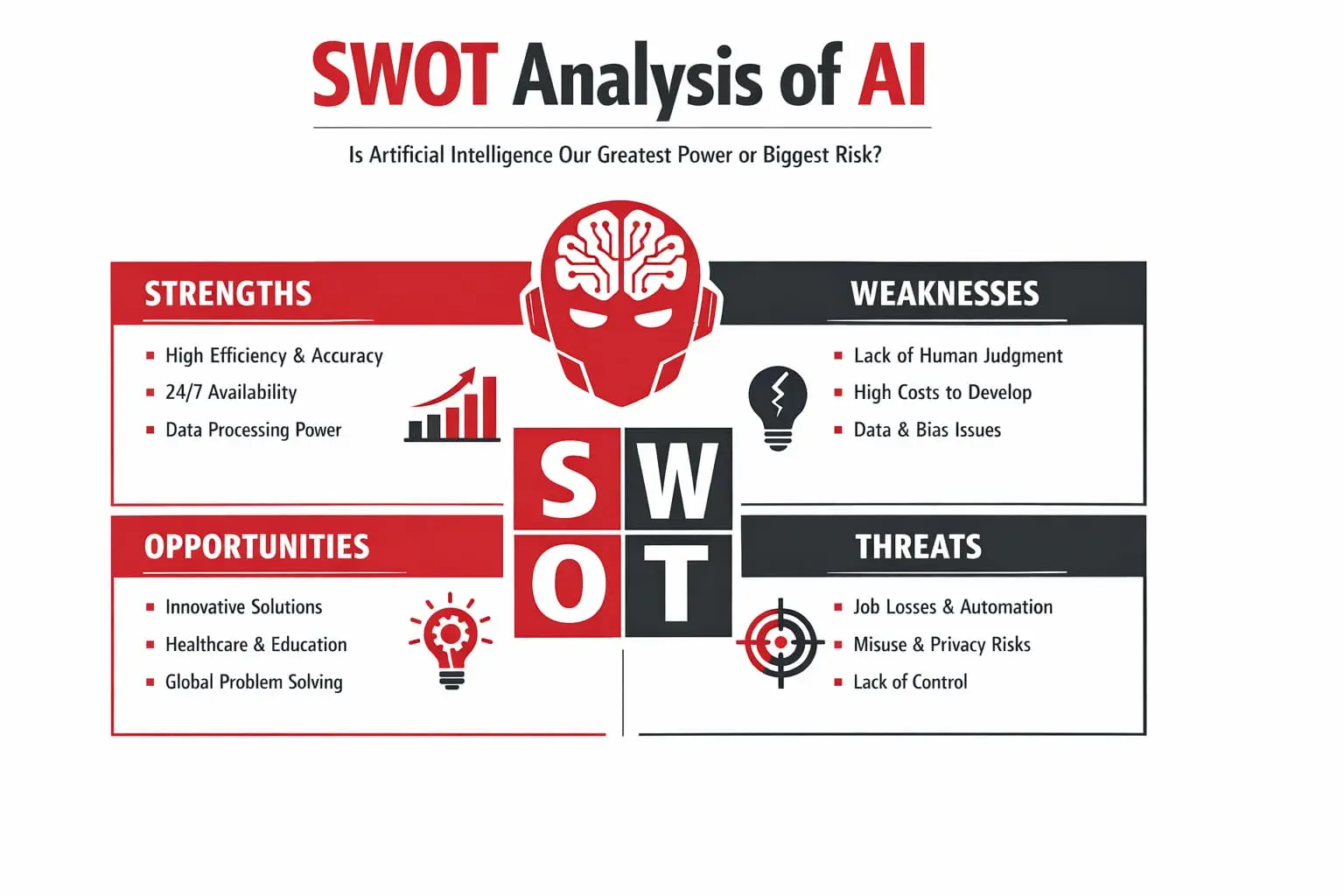
It is creating new job roles, improving productivity, and making information more accessible. In fields like healthcare, AI is helping doctors detect diseases faster. In education, it is offering personalized learning experiences.
That’s the opportunity.
But on the other hand, there is pressure.
Many people now feel the need to “keep up” with AI. Workers worry about job security. Students worry about falling behind if they don’t use AI tools.
“Technology does not replace people overnight. It replaces those who refuse to adapt.”
That fear is real.
There is also a growing concern about over-dependence.
You may have noticed this.
Instead of thinking deeply, people are starting to rely on AI for quick answers. Instead of learning, they are copying.
It feels efficient.
But it slowly weakens independent thinking.
And then there’s privacy.
AI systems learn from data—your data. What you search, what you like, what you write. Most users don’t fully understand how much information they are sharing.
And that’s risky.
Insight: The Truth We Avoid
Let’s be honest.
AI is not just a tool anymore. It is becoming a system that influences behavior.
From recommending what to watch, to suggesting what to buy, to even shaping opinions—AI is quietly guiding choices.
And most people don’t question it.
Because it feels helpful.
But here’s the uncomfortable truth:
“Ease can sometimes replace effort. And when effort disappears, growth slows down.”
There is also a growing gap.
People who understand AI are moving ahead faster. Those who don’t are falling behind—not because they lack ability, but because they lack access or awareness.
This creates a new kind of inequality.
Not based on money.
But based on knowledge.
And perhaps the biggest concern—
Who controls AI?
Because the people who build AI systems also influence how they work. Bias, misinformation, and misuse are real risks.
AI is powerful.
But power without control is dangerous.
A Real-World Reflection
Walk into any classroom today.
You’ll find students using AI tools for homework. Some use it to learn. Others use it to finish work quickly.
The difference is intention.
A teacher recently shared that many assignments now “look perfect but feel empty.”
That says a lot.
AI can write answers.
But it cannot replace curiosity.
Conclusion: The Future We Choose
Artificial Intelligence is not the problem.
How we use it is.
AI has the potential to transform lives, improve systems, and create opportunities we once thought impossible. But it also carries risks that cannot be ignored.
The goal should not be to avoid AI.
The goal should be to use it wisely.
“AI should support human intelligence—not replace it.”
As we move forward, one thing is clear:
The future will not belong to those who fear AI.
It will belong to those who understand it, question it, and use it responsibly.
Because in the end—
Technology shapes the world.
But humans decide how it is used.