Introduction
What does real empowerment look like in a democracy
Is it policy or is it participation
India has long debated the idea of women reservation in legislative bodies but progress has often been slow and uncertain
Now the message from the top is clear
The push is not stopping
Even after setbacks the government says it will continue its efforts to ensure women get a stronger voice in decision making
This is not just about seats
It is about power
What the Prime Minister Said
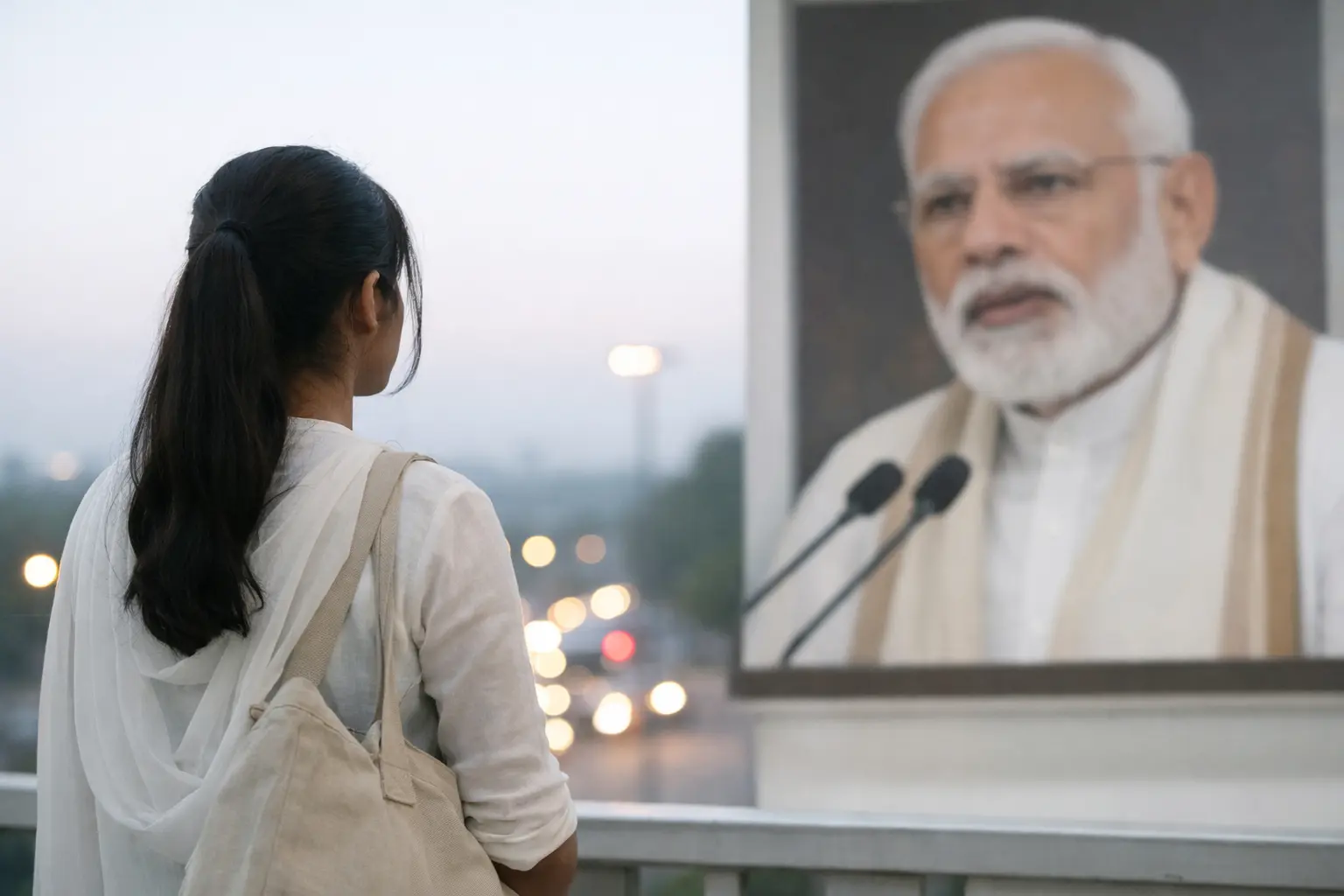
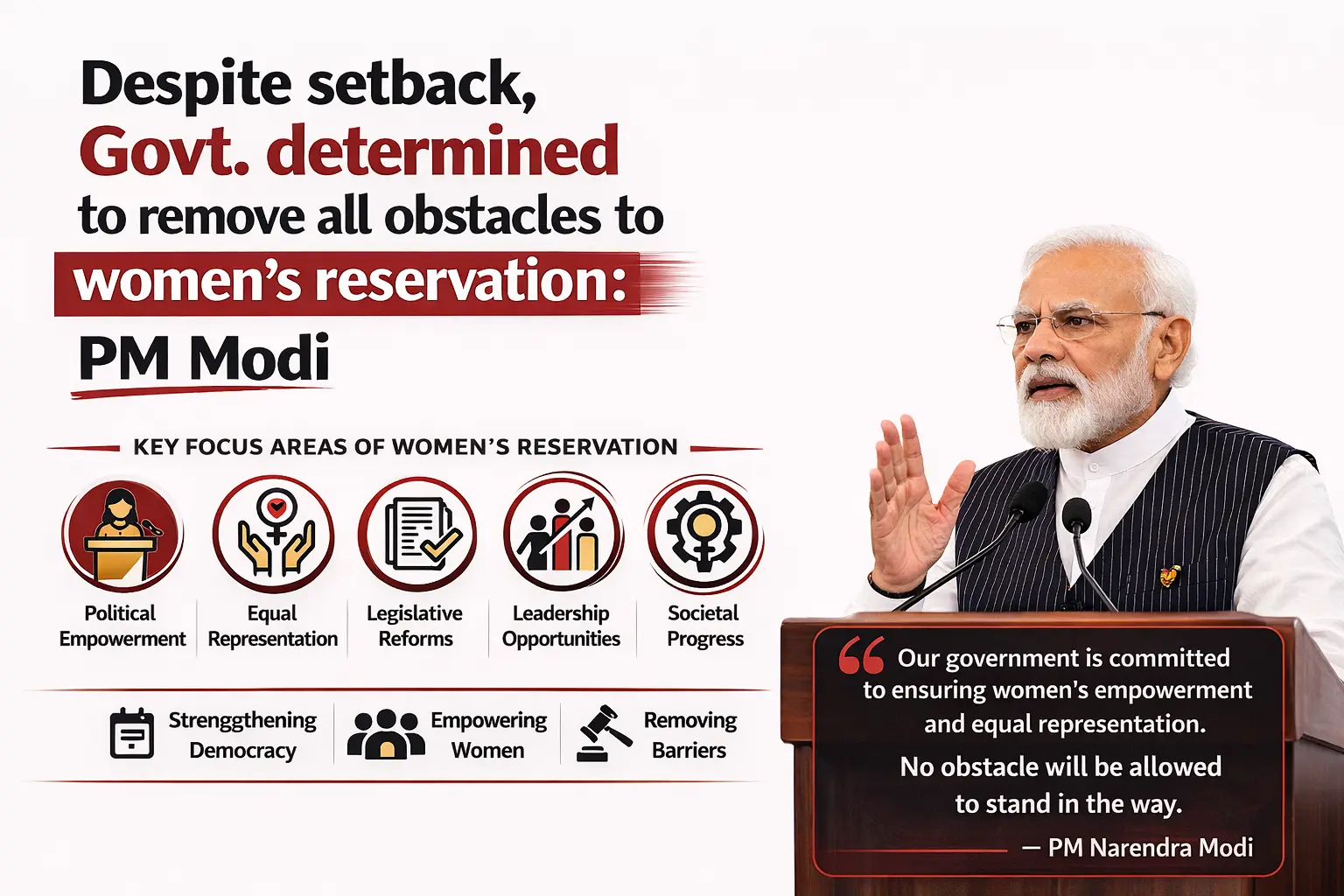
Prime Minister Narendra Modi emphasized that the government remains committed to removing every obstacle that delays or blocks women reservation
He highlighted that empowering women politically is essential for building a balanced and progressive society
The statement comes at a time when discussions around implementation timelines and structural challenges are intensifying
The tone was firm
The intent was clear
The mission continues
Background of Women Reservation in India
The idea of reserving seats for women in legislative bodies is not new
For decades policymakers and activists have pushed for greater representation of women in politics
India has seen success at the local level through reservation in Panchayati Raj institutions where women participation increased significantly
However at the national and state legislative level the progress has been slower
Multiple attempts have been made to pass laws ensuring reservation but political disagreements and logistical challenges have delayed full implementation
Current Status Overview Table
Factor | Status |
|---|---|
Policy Intent | Strong commitment from government |
Implementation | Pending in full scale |
Coverage | Parliament and state assemblies |
Key Challenge | Political consensus and delimitation |
Public Response | Mixed but largely supportive |
Expected Outcome | Increased women representation |
Why This Issue Matters
Women make up nearly half of India population
But their representation in Parliament and state assemblies remains significantly lower
This gap is not just statistical
It reflects deeper structural issues in political participation
Greater representation means more diverse perspectives in policymaking
It means issues like education health safety and employment receive more balanced attention
One simple truth stands out
A democracy cannot be fully representative without equal participation
Reasons Behind the Delay
The delay in implementing women reservation is not due to a single factor
It is a combination of political and structural challenges
One major issue is delimitation
Redrawing constituency boundaries is required before reservation can be applied effectively
Another challenge is political consensus
Different parties have varying views on how reservation should be implemented
There are also concerns about rotation of reserved seats which may affect political stability in certain regions
These complexities have slowed down progress
Impact on Society
The lack of adequate representation has real consequences
Women issues often remain underrepresented in legislative debates
Policies may not fully reflect ground realities experienced by women
At the same time when women do enter leadership roles the impact is visible
Studies and observations show that women leaders often prioritize community welfare education and healthcare
This creates a ripple effect
Empowered leadership leads to empowered communities
Social Impact Table
Area | Effect of Increased Women Representation |
|---|---|
Education | Improved focus on literacy and schooling |
Healthcare | Better attention to maternal and child health |
Safety | Stronger policies on women protection |
Economy | Increased participation in workforce |
Governance | More inclusive decision making |
A Real World Observation
In many rural areas where women have taken leadership roles through local governance systems the change is visible
Better infrastructure
Improved school attendance
Greater community participation
This is not theory
This is happening
Now imagine this impact at the national level
The Bigger Insight
Women reservation is not just a policy decision
It is a structural shift
It changes who makes decisions
It changes what decisions are made
And most importantly it changes how society evolves
One powerful line captures this
Representation is not about numbers It is about influence
Political and Strategic Angle
From a political perspective women reservation also reshapes electoral dynamics
It introduces new leadership
It changes candidate selection
It influences voter engagement
Parties may need to rethink strategies and build stronger grassroots connections
This is both an opportunity and a challenge
Public Sentiment
Public opinion on women reservation is largely supportive
However there are concerns about implementation methods
Some believe reservation should be immediate while others argue for phased execution
There is also debate about whether reservation alone is enough or if broader reforms are needed to support women participation
Despite differences one thing is clear
The demand for change is strong
Challenges Ahead
Even with strong intent the path forward is not simple
Legal procedures political negotiations and administrative processes must align
There is also a need to ensure that reservation leads to genuine empowerment and not symbolic representation
Training support systems and institutional backing will be crucial
A Subtle but Important Trend
More women are entering politics today than ever before
Social awareness education and digital platforms have played a role in this shift
Young women are more willing to participate in public life
This trend is promising
But it needs structural support to sustain
The Uncomfortable Truth
Policy announcements create momentum
But implementation creates impact
India has seen many discussions around women empowerment
But the real test lies in execution
One line defines this reality
Intent creates headlines Action creates history
Future Outlook
The government commitment signals that progress is likely
The timeline may vary but the direction is clear
If implemented effectively women reservation could transform India political landscape
It could redefine leadership
It could reshape governance
And it could accelerate social progress
Conclusion
The statement by Narendra Modi is more than a political message
It is a signal of intent
Despite setbacks the push for women reservation continues
Because this is not just about policy
It is about equality
It is about representation
And it is about the future of democracy
The question is no longer whether change will happen
The real question is
How soon
And how effectively
Because when half the population gets a stronger voice
The entire nation moves forward.