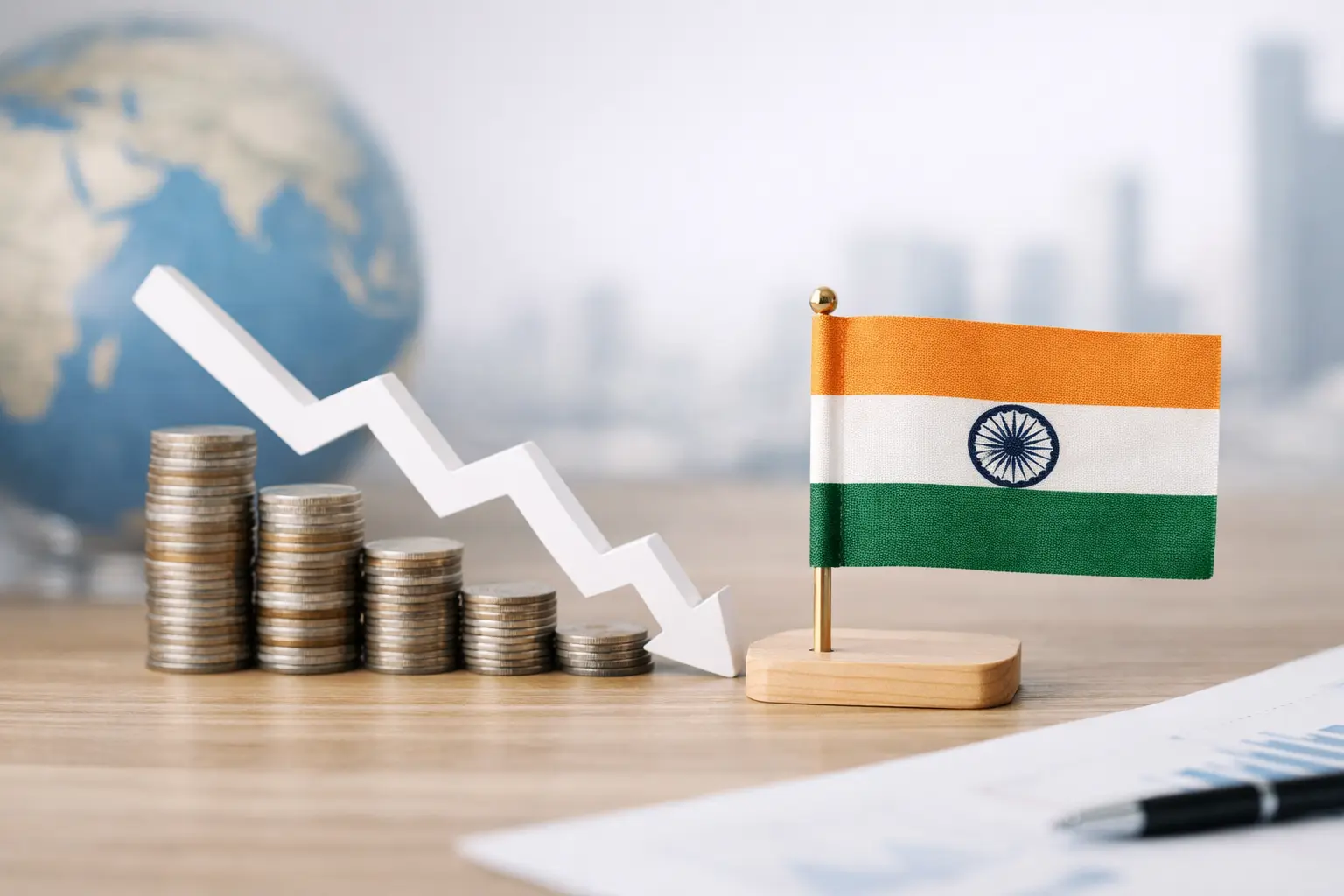
How does a country racing toward economic dominance suddenly lose its position?
And more importantly — does this change anything for you?
For a nation that has been celebrating its rise as a global powerhouse, the news hits differently: India has slipped from the 4th largest economy to the 6th in global rankings. On paper, it looks like just a number change. In reality, it signals something deeper — a shift in momentum.
Introduction: The Fall No One Expected
Over the past decade, India’s economic growth has been one of the fastest in the world. Headlines proudly talked about overtaking major economies. Startups boomed. Digital payments exploded. The middle class expanded.
And then this.
A drop in ranking doesn’t mean the economy collapsed. But it does mean other countries are moving faster — or smarter.
That’s the uncomfortable part.
What’s Happening — And Why?
India’s GDP is still growing. But global rankings are relative. If other economies grow faster, India slips — even while improving.
Several factors are behind this shift:
1. Global Competition Is Getting Fierce
Countries like Germany and Japan have stabilized after slow phases, while emerging economies are catching up aggressively. Growth is no longer enough — efficient growth is the new benchmark.
2. Domestic Challenges Are Slowing Momentum
Inflation, uneven job creation, and consumption gaps are holding things back. Urban areas are growing, but rural demand is still fragile.
You can see it in real life.
Shopping malls are full — but small local markets are struggling.
3. Manufacturing Isn’t Scaling Fast Enough
India wants to become a manufacturing hub, but supply chain issues, infrastructure gaps, and policy delays still exist.
“Make in India” is a strong idea. Execution? Still catching up.
4. Global Economic Shifts
Currency fluctuations and global slowdowns also impact rankings. A weaker currency can shrink GDP in dollar terms, even if local growth continues.
Impact: Why This Matters to You
At first glance, this sounds like something only economists should care about.
But it trickles down faster than you think.
1. Job Pressure
If growth slows or becomes uneven, job creation takes a hit. Young graduates entering the workforce feel it first.
Every year, millions of students graduate.
Not all of them find stable jobs.
2. Rising Cost of Living
When growth doesn’t match expectations, inflation hits harder. Essentials feel more expensive.
You’ve probably noticed it already — groceries costing more, fuel prices fluctuating, rent creeping up.
3. Investor Confidence
Global investors watch rankings closely. A drop can affect how much money flows into the country.
Less investment = fewer opportunities.
Insight: The Truth Most People Won’t Say
Here’s the uncomfortable reality:
Ranking doesn’t define strength — but it exposes weaknesses.
India’s growth story is real. But it’s also uneven.
Some parts of the country are moving at global speed. Others are still catching up with basic infrastructure.
And that gap matters.
“A fast-growing economy with uneven distribution is like a car with one flat tire — it moves, but not smoothly.”
Another truth?
“We celebrate growth numbers, but ignore growth quality.”
And maybe the hardest one:
“The problem isn’t falling behind. The problem is thinking we’re already ahead.”
A Relatable Reality Check
Walk into any metro city — you’ll see luxury cars, premium cafes, and booming startups.
Step just 50 kilometers outside — and the story changes.
That contrast is the real economy.
Not just GDP charts.
A Subtle Trend You Should Notice
Over the last few years, India’s economy has shown high growth with high inequality. This pattern is becoming more visible now.
Earlier, growth alone pushed rankings up.
Now, structural strength matters more.
This is a shift from speed to stability.
Conclusion: This Is Not a Crisis — It’s a Signal
India falling from 4th to 6th largest economy is not the end of the growth story.
But it is a wake-up call.
A reminder that progress isn’t guaranteed.
And momentum can slow — quietly.
The real question isn’t “Why did India fall?”
It’s:
“What will India fix next?”
Because in global economics, staying still is the fastest way to fall behind.