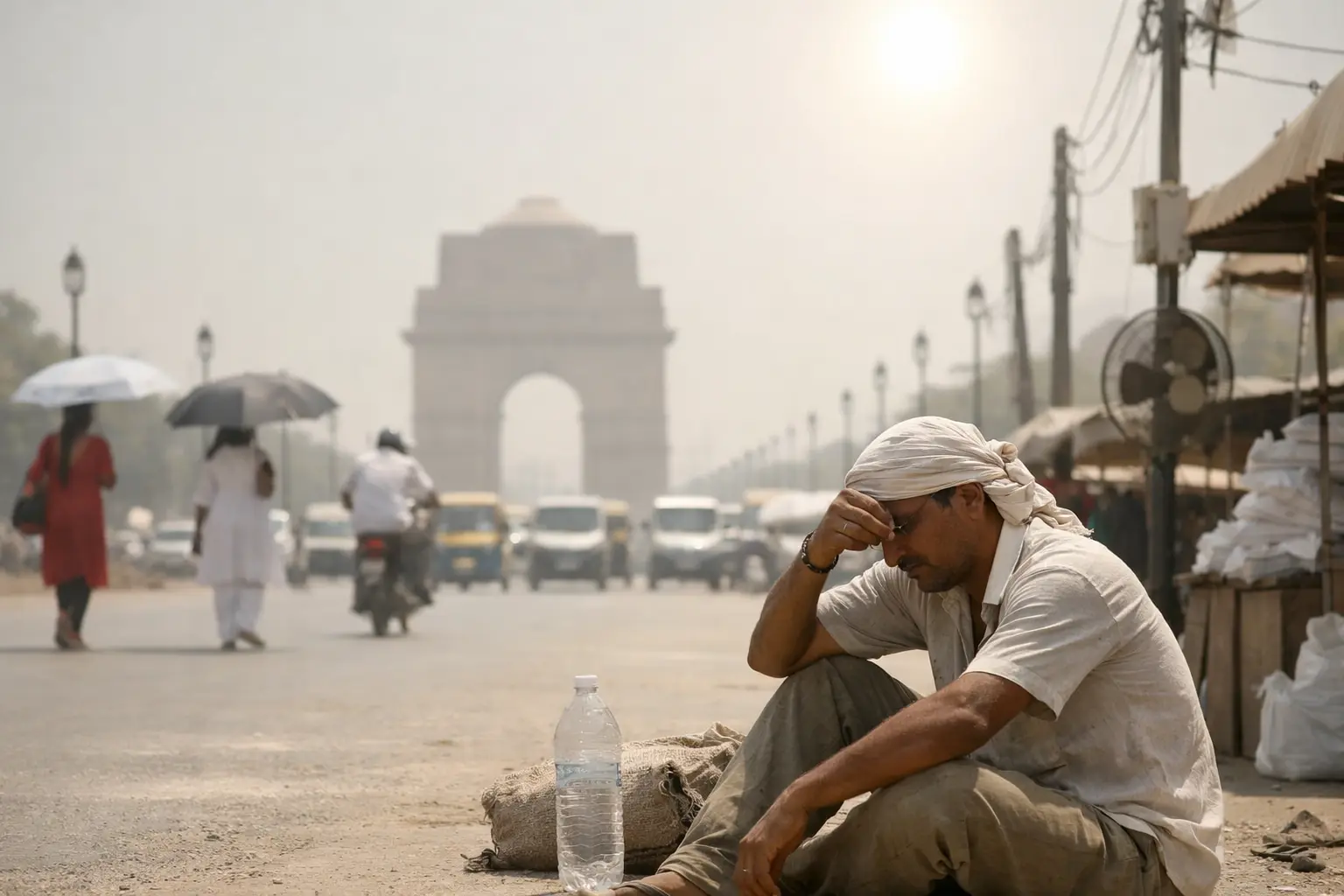
What happens when an entire country starts to feel like an oven?
What if stepping outside for 10 minutes feels like a risk?
That’s not an exaggeration anymore.
For the next two weeks, India is expected to experience some of the highest temperatures on the planet, with multiple regions crossing extreme heat thresholds. Cities that are already used to scorching summers are now entering dangerous territory — where heat is not just uncomfortable, but life-disrupting.
What’s Happening — And Why It’s Getting Worse
This isn’t a normal summer spike.
India is currently under the grip of an intense heatwave in India 2026, driven by a mix of climatic factors. High-pressure systems are trapping hot air, preventing clouds from forming. At the same time, dry winds from the northwest are pushing temperatures even higher.
Add to that a bigger issue: climate change in India is amplifying these patterns.
Over the past decade, heatwaves have become:
More frequent
More intense
Longer-lasting
Earlier, extreme heat would last a few days. Now, it stretches into weeks.
And this time, forecasts suggest temperatures in several states could stay above 45°C (113°F) consistently — with some areas flirting with even higher numbers.
This is no longer “just summer.”
This is escalation.
The Real Impact — Beyond the Thermometer
Extreme heat doesn’t just raise temperatures. It changes how people live.
Daily wage workers are the first to feel it. Construction slows down. Outdoor labor becomes dangerous. Income drops — but expenses don’t.
Students struggle to focus. Offices see lower productivity. Even basic routines like commuting or cooking feel exhausting.
And then there’s the silent effect: mental fatigue.
When your body is constantly stressed by heat, your patience shortens. Your energy dips. Your mood shifts.
You’ve probably felt it — that irritation on a hot afternoon when even small things feel overwhelming.
That’s not just you. That’s heat stress.
Hospitals are already reporting rising cases of:
Dehydration
Heatstroke
Low blood pressure
Electricity demand is also shooting up due to AC and cooler usage, increasing the risk of power cuts — which, ironically, makes things worse.
One power cut in peak afternoon heat can turn a normal day into a survival test.
A Harsh Truth Most People Ignore
We still treat heat like a seasonal inconvenience.
It’s not.
It’s becoming a public health crisis.
Here’s the uncomfortable reality:
India is heating faster than its infrastructure can adapt.
Urban areas are especially vulnerable. Concrete buildings trap heat. Green cover is shrinking. Cities turn into “heat islands” where temperatures feel even higher than official readings.
Meanwhile, access to cooling is unequal.
Some people switch on air conditioners.
Others search for shade.
That gap matters.
“Climate change doesn’t affect everyone equally. It exposes inequality.”
And here’s another truth:
“Surviving heat is slowly becoming a privilege.”
A Shift We Can’t Ignore
There’s a noticeable trend — summers are starting earlier and ending later.
What used to be peak heat in May is now creeping into April. Nights are no longer cooling down like they used to. Recovery time is shrinking.
Even older generations are saying the same thing:
“This wasn’t how summers felt before.”
That comparison says a lot.
We are not just experiencing weather.
We are witnessing change.
A Moment of Reflection
Pause for a second.
If this is how things feel now… what happens in the next 5–10 years?
Will schools shift timings permanently?
Will outdoor work become limited to early mornings?
Will cities redesign themselves around heat?
These are no longer theoretical questions.
They are approaching reality.
Conclusion — This Is More Than Just a Heatwave
India being the hottest country for two weeks is not just a headline. It’s a warning.
A signal that something deeper is shifting.
“Heat doesn’t announce disaster loudly. It builds silently, day after day.”
And the real danger?
People get used to it.
Because once extreme becomes normal, change becomes harder.