Introduction
Why does the price of the dollar matter to you
Even if you have never bought foreign currency
Even if you have never traveled abroad
The answer is simple
Because when the dollar rises
Everything feels more expensive
India is experiencing a steady increase in dollar value against the rupee and the impact is spreading across sectors faster than most people realize
This is not just an economic story
It is a daily life story
What Is Happening
The Indian rupee has been weakening against the US dollar
This means you now need more rupees to buy one dollar
For example if earlier one dollar cost 80 rupees and now it costs 84 rupees it reflects a decline in rupee value
This change may look small
But its impact is large
Because India depends heavily on imports
Currency Movement Table
Factor | Earlier | Now |
|---|---|---|
1 USD Value | ₹80 | ₹84 |
Rupee Strength | Stronger | Weaker |
Import Cost | Lower | Higher |
Export Benefit | Limited | Increased |
Why the Dollar Is Rising
There are multiple reasons behind this trend
The US economy remains relatively strong compared to many other countries
Higher interest rates in the United States attract global investors
When investors move money into US assets demand for the dollar increases
At the same time global uncertainty pushes investors toward safer currencies like the dollar
India also faces trade deficits which means it imports more than it exports
This increases demand for dollars in the domestic market
Key Drivers Table
Factor | Impact |
|---|---|
US interest rates | Stronger dollar |
Global uncertainty | Safe haven demand |
Trade deficit | Higher dollar demand |
Capital outflows | Pressure on rupee |
Oil imports | Increased forex demand |
Impact on Daily Life
The rising dollar affects more than just financial markets
It directly impacts everyday expenses
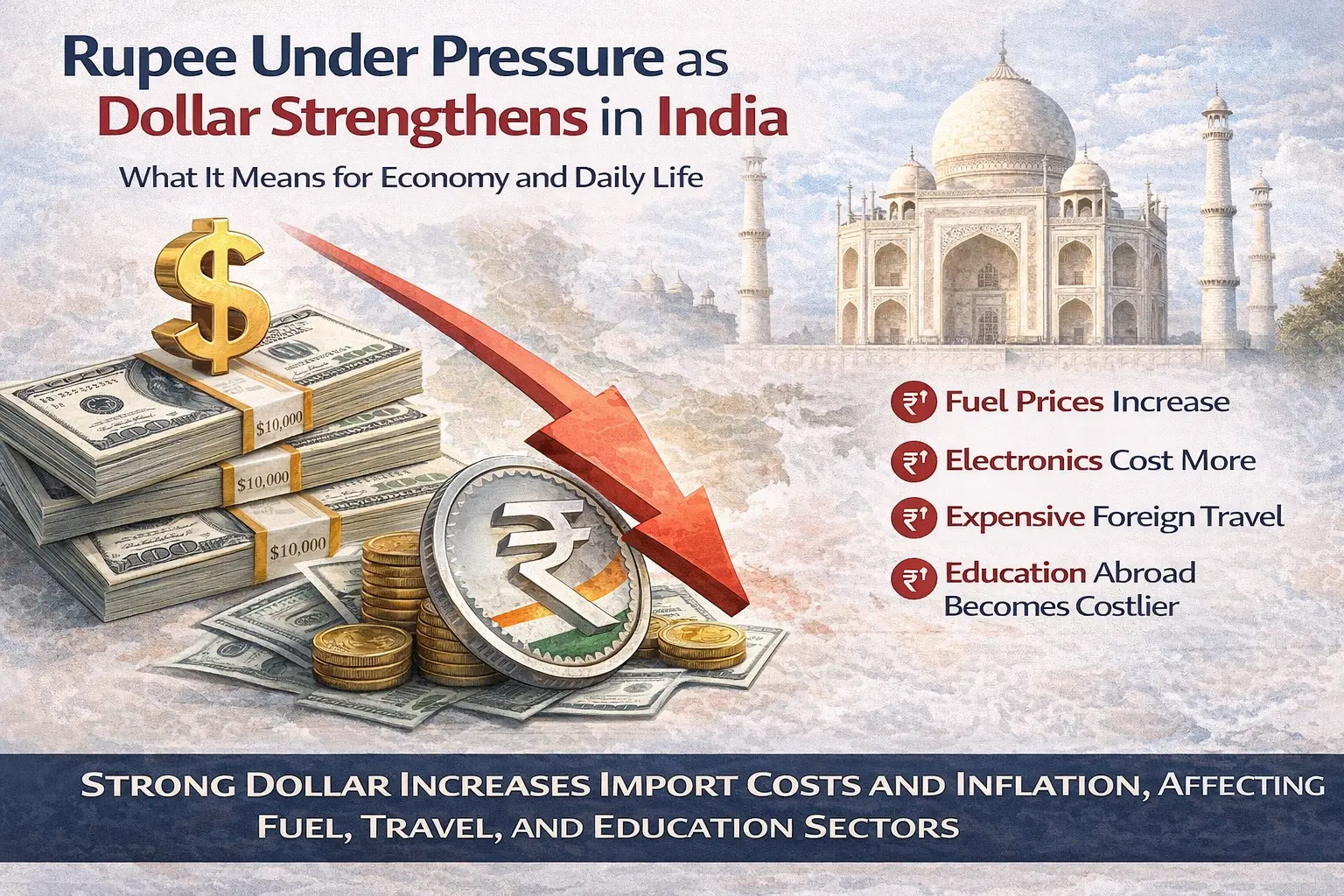
Fuel prices increase because crude oil is priced in dollars
Electronics become costlier due to import dependency
Travel abroad becomes more expensive
Education in foreign universities becomes less affordable
A simple example
A student planning to study abroad now needs significantly more money than before
Impact on Key Sectors
Fuel
India imports most of its crude oil
A stronger dollar increases fuel costs
This leads to higher transportation expenses
Education
Students studying abroad face higher tuition and living costs
Technology
Imported gadgets and components become expensive
Travel
Foreign trips become less affordable
Sector Impact Table
Sector | Effect |
|---|---|
Fuel | Price increase |
Education | Higher expenses abroad |
Technology | Costlier imports |
Travel | Expensive foreign trips |
Business | Increased operational cost |
The Positive Side
Not all effects are negative
Exporters benefit from a weaker rupee
Indian goods become cheaper in international markets
This increases competitiveness
IT companies and service exporters often gain from a strong dollar
The Bigger Insight
Currency value is not just a number
It is a reflection of economic strength
When the dollar rises it signals global shifts
And those shifts affect every country differently
One powerful line explains this
A strong dollar makes the world more expensive for everyone else
Real World Observation
You may not track exchange rates daily
But you notice when fuel prices rise
When gadgets cost more
When travel becomes expensive
That is the dollar effect in action
A Slightly Honest Thought
Most people ignore currency movements
Until it hits their wallet
Risks and Concerns
Continuous depreciation of the rupee can create long term challenges
Inflation may rise
Foreign debt becomes more expensive
Investor confidence may fluctuate
The government and central bank must manage these risks carefully
Policy Response
The Reserve Bank of India often intervenes to stabilize the currency
It uses foreign exchange reserves to control excessive volatility
Interest rate adjustments and policy measures also play a role
However complete control is not possible
Because currency markets are influenced by global factors
A Subtle Trend
There is a growing shift in global financial dynamics
Currencies are becoming more volatile
Economic events in one country quickly affect others
This interconnected system increases both opportunity and risk
Psychological Impact
Currency decline also affects perception
People feel less financially secure
Businesses become cautious
Investment decisions slow down
Confidence plays a major role in economic activity
Key Insight
The rise of the dollar is not just a financial event
It is a signal
A signal of global economic movement
And a reminder of how connected economies have become
Conclusion
The increase in dollar prices in India is a complex issue with wide ranging effects
It impacts imports inflation business costs and everyday expenses
While some sectors benefit the overall pressure on consumers and the economy cannot be ignored
The real challenge is not just managing the exchange rate
It is adapting to a world where global forces shape local realities
Because in today economy
What happens in one country
Does not stay in one country