Meta Quest 3 vs Apple Vision Pro: Which VR Headset Is Better?
The future of technology may be sitting directly on people’s faces.
That sounds extreme.
But the growing battle between Meta Quest and Apple Vision Pro is showing just how serious immersive technology is becoming.
Consumers are no longer asking whether virtual reality matters.
Now they are asking which ecosystem will dominate it.
Two Very Different Visions of the Future
At first glance, both headsets seem similar.
Both promise immersive digital experiences.
Both blend virtual and mixed reality technology.
But their goals are completely different.
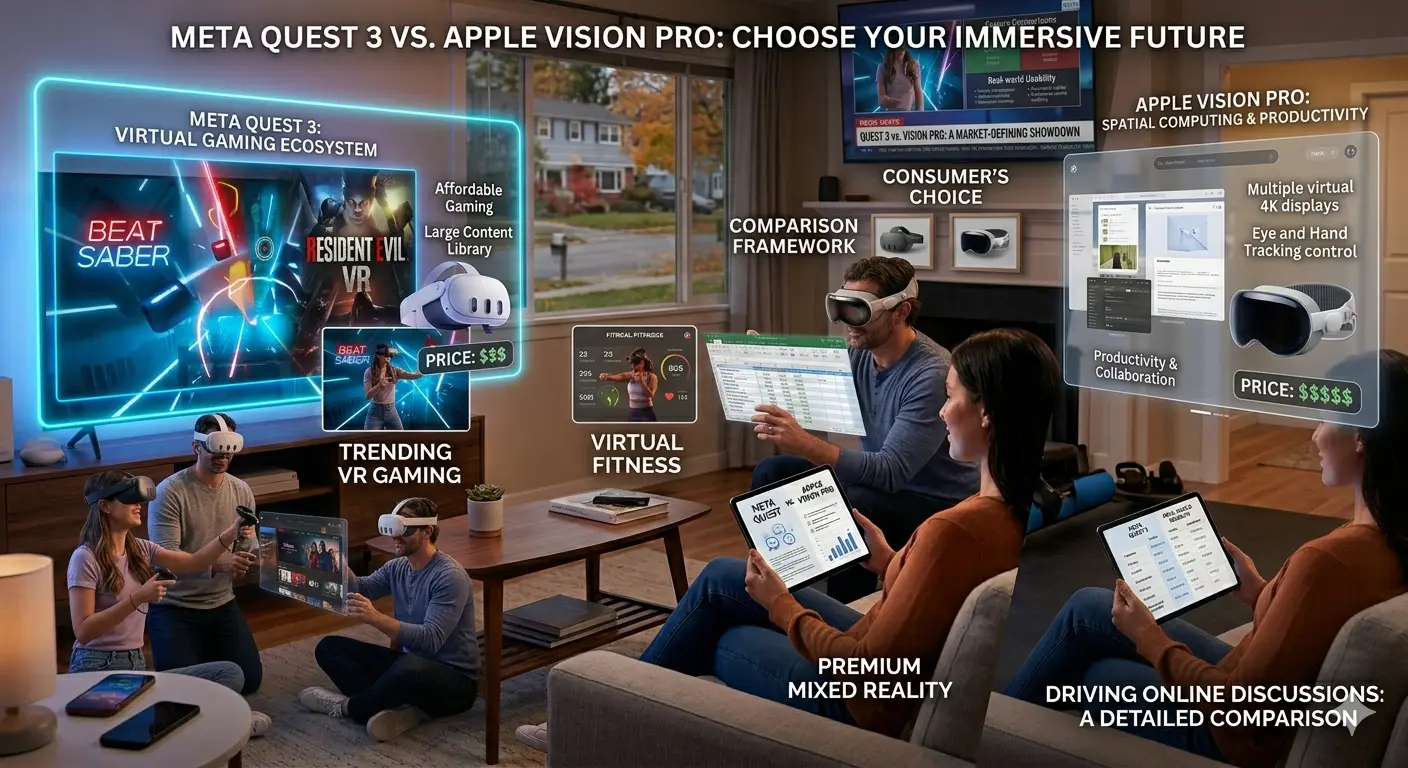
Meta focuses heavily on:
gaming
affordability
social VR experiences
mass adoption
Apple focuses more on:
spatial computing
productivity
premium experiences
advanced digital interaction
That difference changes everything.
Price Changes the Conversation
One of the biggest differences is cost.
Meta Quest devices are designed to reach larger audiences at more affordable pricing levels.
Apple Vision Pro enters the market as a premium product aimed at users willing to spend heavily for advanced experiences.
For many buyers, the decision becomes simple:
Do they want accessibility or luxury?
That question is driving huge online debates.
Gaming vs Productivity
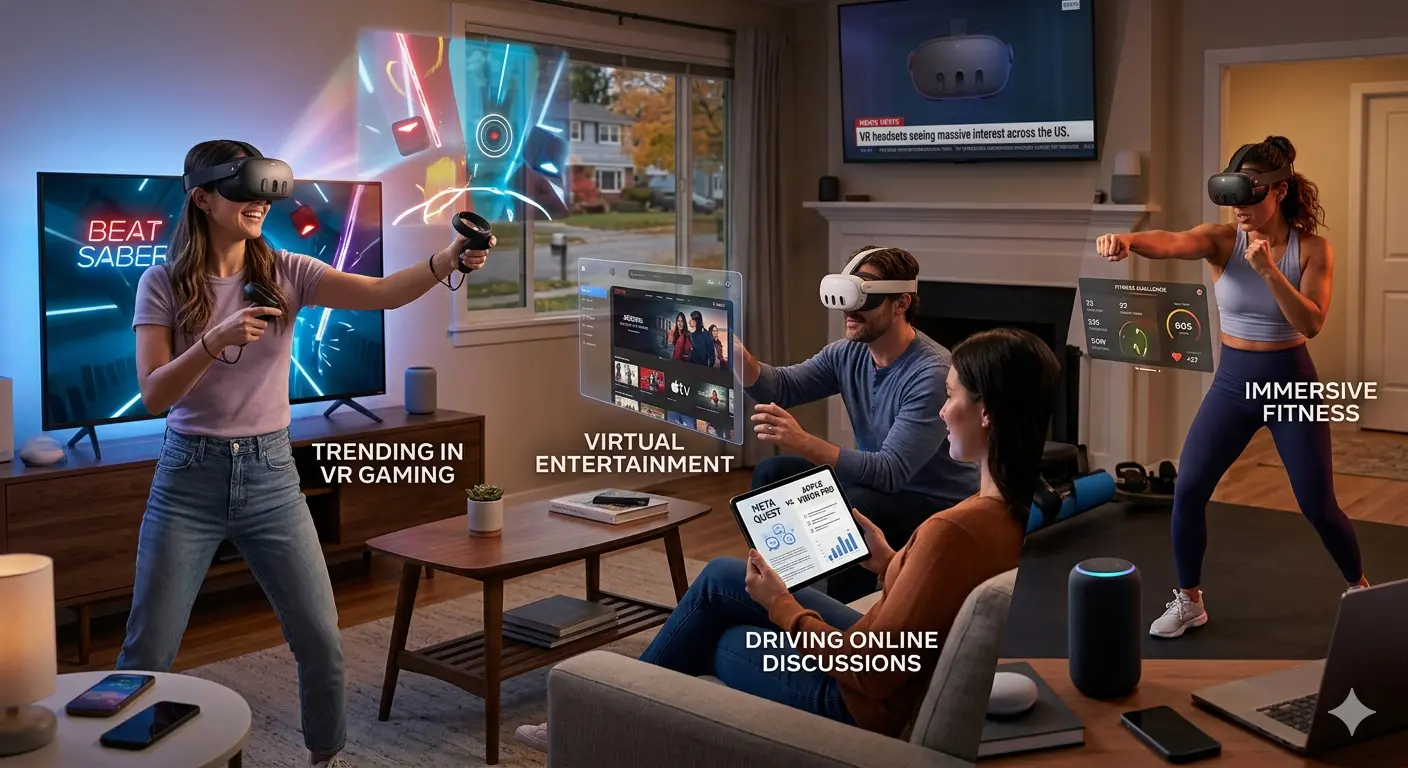
Meta still dominates the gaming conversation.
VR gaming remains one of the biggest reasons people buy headsets in the first place.
Fitness games, immersive adventures, and multiplayer VR experiences continue attracting younger audiences.
Apple, however, is trying to redefine the category entirely.
Instead of focusing mainly on gaming, Apple is pushing the idea that headsets could replace traditional screens for:
work
entertainment
communication
multitasking
That idea feels exciting to some users.
And unnecessary to others.
The Bigger Industry Shift
Something deeper is happening underneath this competition.
Technology companies are trying to control the next major computing platform.
Years ago, smartphones changed everything.
Now companies believe immersive technology could become the next major digital revolution.
That explains why competition is becoming so aggressive.
Impact on Consumers
This battle could shape how people interact with technology for years.
Consumers may eventually choose ecosystems the same way they once chose between smartphones.
Some users will prioritize:
gaming experiences
affordability
entertainment value
Others may prioritize:
productivity tools
premium hardware
advanced digital interfaces
The divide is already becoming visible.
Insight
Here’s the reality:
“The companies controlling immersive technology may control the future of digital attention.”
That is why this competition matters far beyond gaming.
This is about influence.
Habit.
And long-term user behaviour.
A Real-World Observation
Watch how people react after trying immersive headsets for the first time.
Some feel amazed.
Others feel uncomfortable immediately.
That split reaction shows something important:
The technology still feels new.
And society is still deciding how much of it belongs in daily life.
Powerful Lines
“The next technology war may happen inside virtual worlds.”
“Immersive devices are competing to replace traditional screens.”
“The future of computing may become wearable.”
Conclusion
The battle between Meta Quest 3 and Apple Vision Pro is growing because both companies are selling different visions of the future.
One focuses on accessible virtual reality.
The other focuses on premium spatial computing.
And consumers are now deciding which future they believe in.