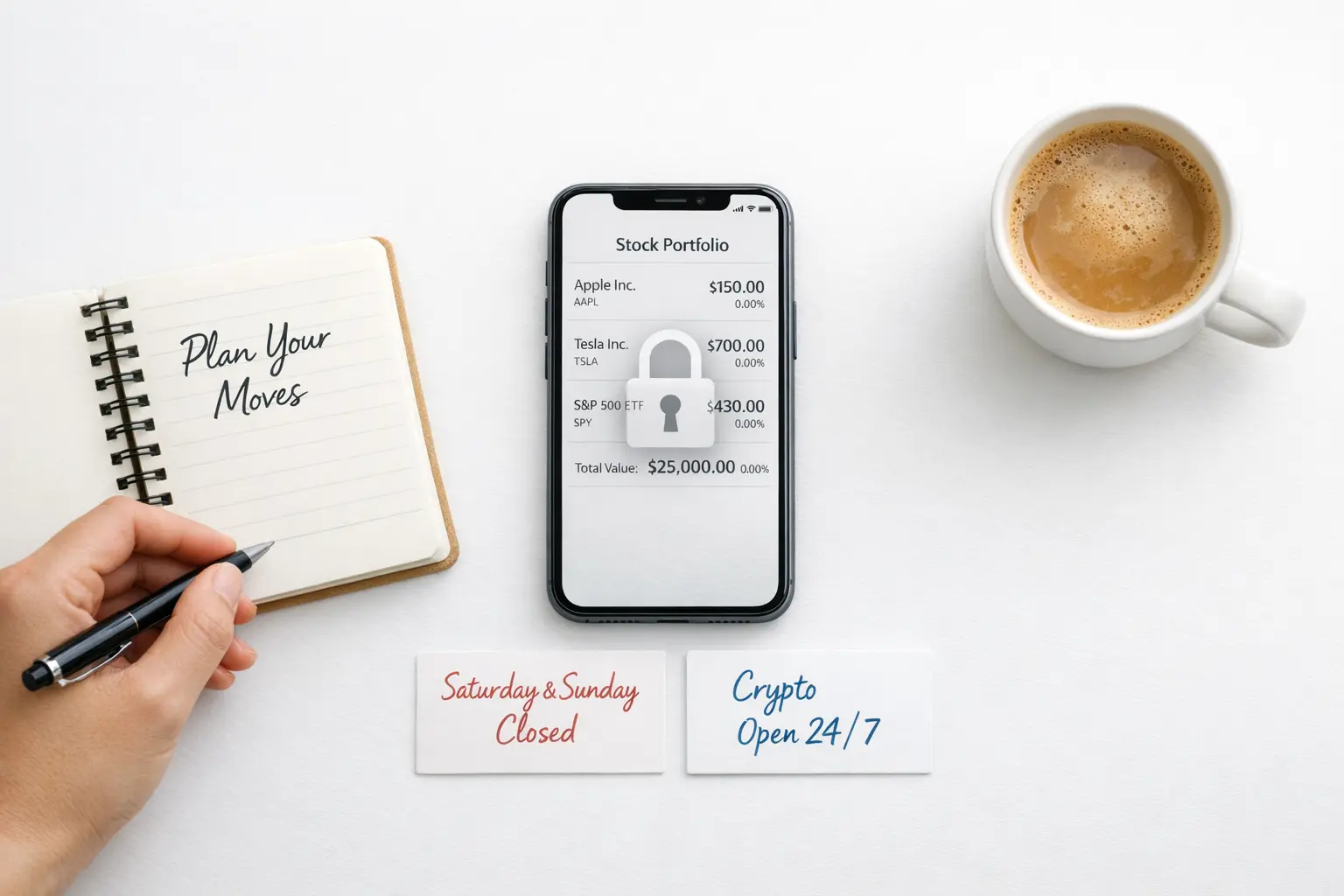
It is Saturday morning. You open your investing app. Your portfolio is frozen. No movement. No trades. No updates. You are not doing anything wrong. The market is simply closed. But what does that actually mean for your money?
Introduction: The Simple Answer Most People Never Get Fully Explained
The stock market runs like a business. It has opening hours. It has closing hours. It has days off. And just like any business, when it is closed, transactions stop.
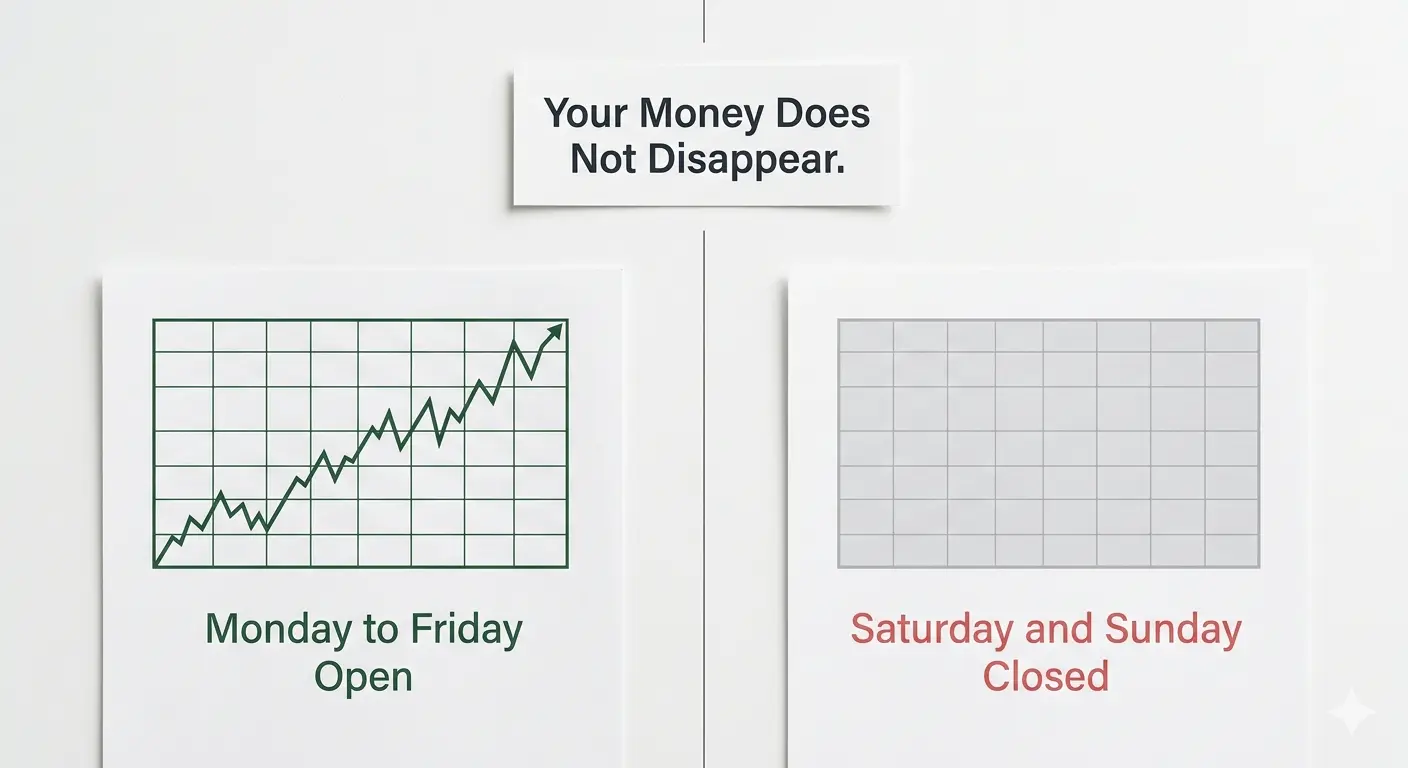
US stock markets are closed on Saturdays and Sundays. There are no regular trading hours on weekends.
That is the short answer. But the full picture is much more useful for anyone who actually invests money.
Main Explanation: Exact Stock Market Hours in 2026
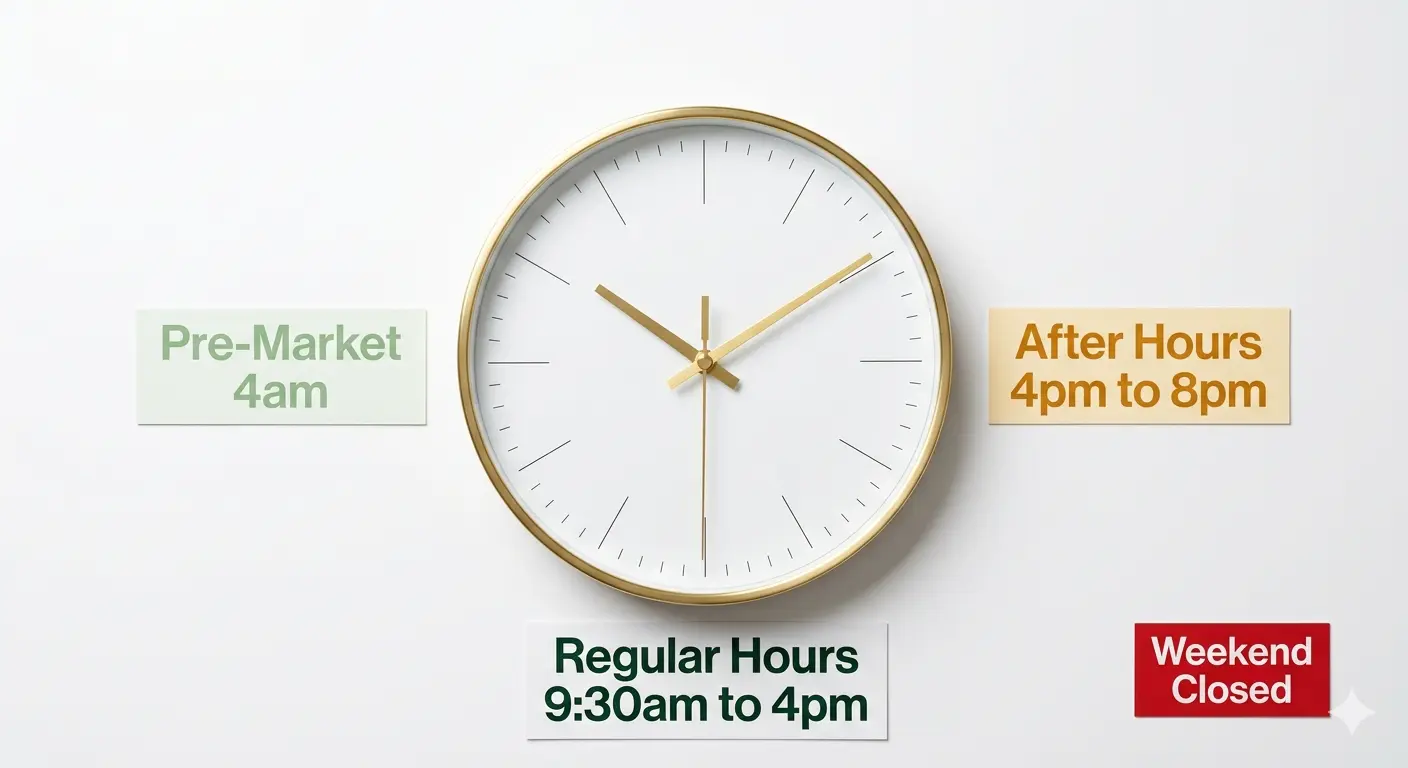
The US stock market opens at 9:30 am Eastern Time and closes at 4:00 pm Eastern Time Monday through Friday. It is closed on the weekends and most federal holidays.
This applies to both major US exchanges. The New York Stock Exchange and the Nasdaq follow the same schedule.
Nasdaq trading hours are Monday through Friday opening at 9:30 am Eastern Time and closing at 4:00 pm Eastern Time.
So if you are trying to buy or sell a stock on a Saturday or Sunday, your order will simply sit and wait until Monday morning at 9:30 am Eastern Time.
But Wait — You Can Still Trade on Weekends
This surprises most people. While the official market is closed, extended trading sessions exist that give investors more flexibility.
Extended hours trading refers to the periods directly before the stock market officially opens at 9:30 am ET and right after it closes at 4:00 pm ET.
Pre-market trading hours run from 4:00 am to 9:30 am Eastern Time on Nasdaq. After hours trading runs from 4:00 pm to 8:00 pm Eastern Time. Certain brokers have different pre-market and after hours trading times.
However there is an important warning here.
Extended markets carry risks. The volatility tends to be much higher and there is less liquidity meaning that fewer people are trading and that prices tend to move much more dramatically.
In simple terms — less people trading means prices can swing wildly on very small orders. Not ideal for beginners.
Complete Stock Market Hours Guide 2026
Session | Hours Eastern Time | Days Available |
|---|---|---|
Pre-Market Trading | 4:00 am to 9:30 am | Monday to Friday |
Regular Trading | 9:30 am to 4:00 pm | Monday to Friday |
After Hours Trading | 4:00 pm to 8:00 pm | Monday to Friday |
Weekend Trading | Not Available | Saturday and Sunday |
Crypto Trading | 24 hours | Every day including weekends |
What About Holidays — When Else Is the Market Closed
Weekends are not the only time the market closes. Federal holidays also shut down trading for the full day or part of it.
Stock markets in the US regularly suspend operations throughout the year to observe holidays such as Presidents Day, Juneteenth, and Labor Day. Occasionally stock markets will close early at 1:00 pm on the day before or after major holidays.
Here are the key 2026 closures every investor should know:
In 2026 the stock market will close at 1:00 pm on the day after Thanksgiving and on Christmas Eve which both fall on weekdays. Independence Day falls on a Saturday in 2026 so the NYSE and Nasdaq will close for the full day on Friday July 3 to observe the holiday.
The stock market is open on the Friday after Thanksgiving but its trading session closes early at 1:00 pm Eastern Time. It is one of two or three days annually that the stock market closes before 4:00 pm.
What Happens to Your Money When the Market Is Closed
This is the question most investors actually want answered. And the answer is reassuring.
Your money does not disappear. Your stocks do not change hands. Everything simply pauses. When the market reopens on Monday morning your portfolio picks up exactly where it left off on Friday at 4:00 pm.
However prices can still react to news that breaks over the weekend. If a major company announces something big on a Saturday, that news will hit stock prices the moment trading opens on Monday. This is why serious investors pay attention to weekend news even when the market is closed.
A real life observation: During a major weekend announcement from a tech company, investors who read the news on Sunday night placed pre-market orders early Monday morning at 4:00 am and captured price movements before most casual investors even woke up.
"The market closes on weekends. The news does not."
What Can You Trade on Weekends
Just because stocks stop does not mean all investing stops.
Cryptocurrency markets are always open — 24 hours per day 365 days per year.
Most cryptocurrency exchanges operate 24 hours a day 7 days a week including holidays.
So if you absolutely need to make a financial move on a Saturday or Sunday, cryptocurrency is the only major market available to you. But remember the same volatility warnings apply even more strongly to crypto.
Weekends are actually a great time to research. Not to react.
"The best investors use weekends to plan their moves not make them."
Insight: Why the Market Closes on Weekends at All
Many people wonder why a modern digital market needs to close at all.
One of the main reasons for limited trading hours is liquidity or how much buying and selling is going on at a given time.
When fewer people are trading, prices become unstable and unpredictable. The fixed schedule keeps markets orderly, fair, and liquid. It also gives companies, regulators, and investors time to process information properly before making decisions that move billions of dollars.
"Structure is not a limitation. In financial markets structure is protection."
Conclusion: What You Should Actually Do on Weekends
Stop worrying about your portfolio on Saturdays. Use the time wisely instead.
Read financial news. Research companies you are interested in. Review your strategy. Plan your moves for Monday. By the time the opening bell rings at 9:30 am on Monday you will be better prepared than 90 percent of other investors.
Occasionally stock markets have closed unexpectedly for national tragedies, natural disasters, and days of mourning.
So while the weekend schedule is predictable, always stay informed. Markets can and do close for unexpected reasons. Knowing this keeps you one step ahead.
"Your money rests on weekends. Your research should not."