Was March Really That Long — Or Was It Just in Our Heads?
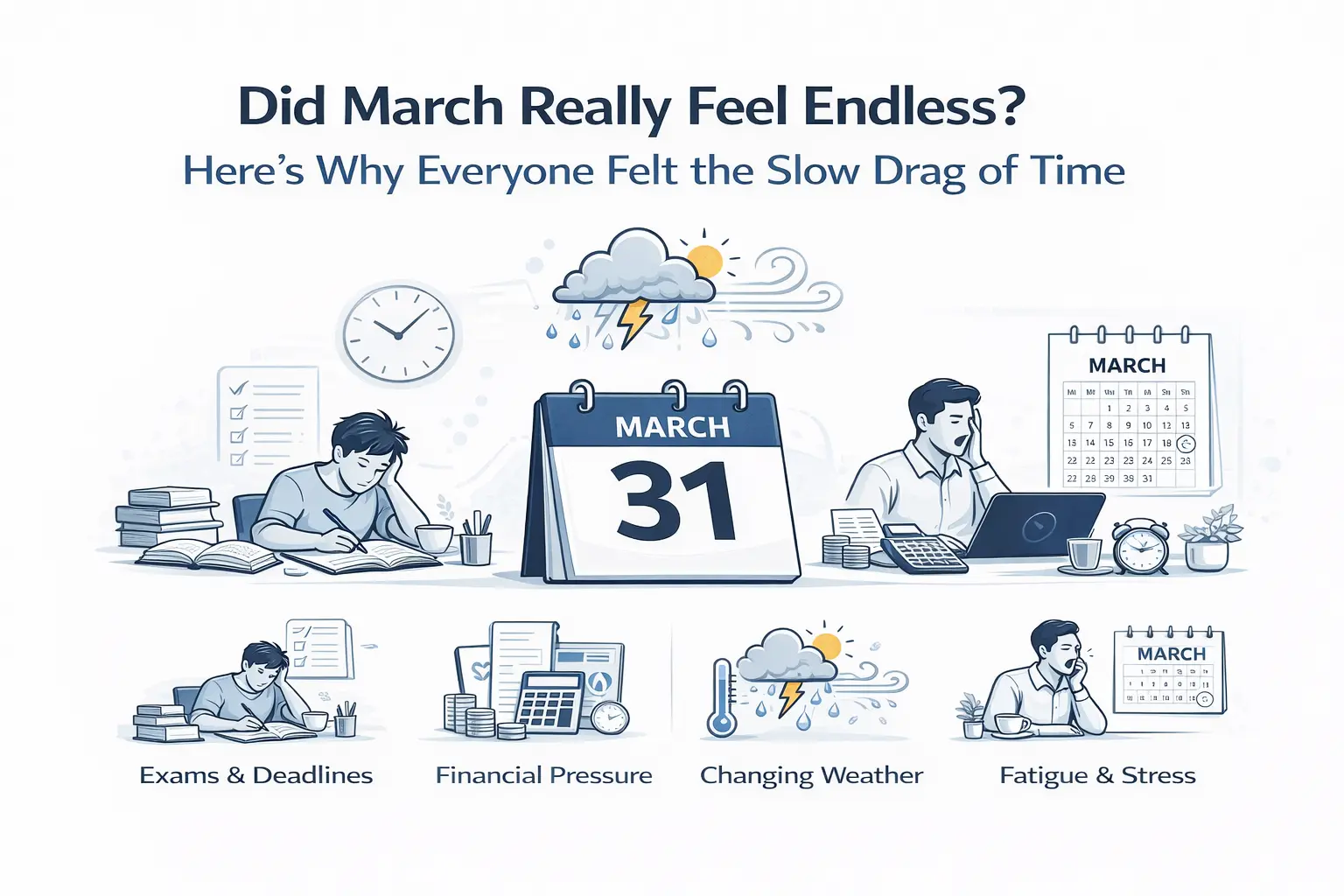
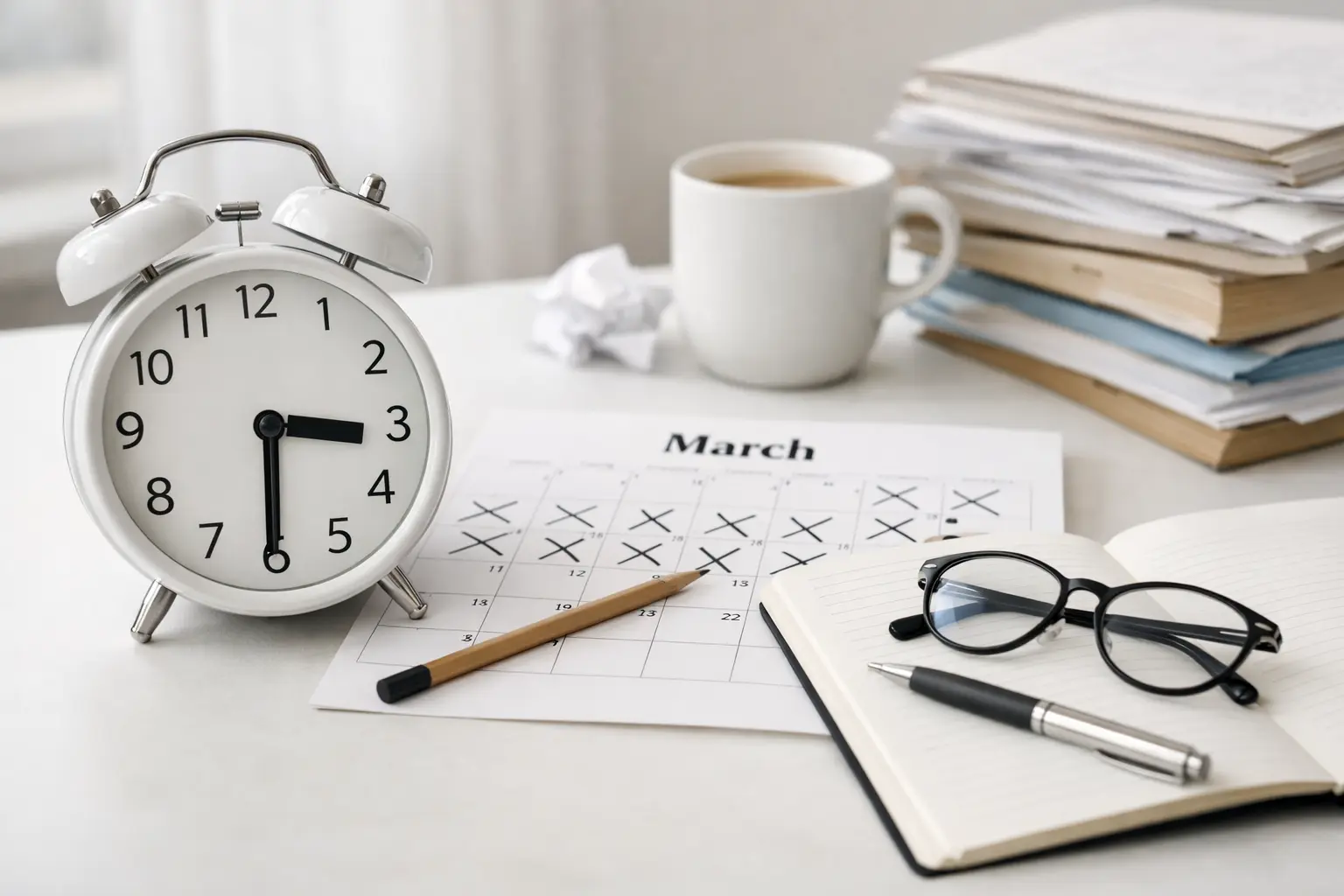
Did March actually stretch longer than usual… or did it just feel endless?
If you ask students, freelancers, or anyone glued to deadlines, most will say the same thing: “March felt like three months packed into one.” But here’s the uncomfortable truth—time didn’t change. Our experience of it did.
And that says a lot about how we’re living.
Introduction: The Month That Refused to End
March is just 31 days. Same as January. Same as July. No special extension. No hidden bonus days.
Yet, this year, people across India—and even globally—kept saying the same thing: “Why is March so long?”
From exam pressure 2026 to financial year endings, March hits differently. Schools rush to finish syllabi. Offices scramble to close targets. Freelancers juggle overlapping deadlines.
It’s not the calendar.
It’s the chaos inside it.
Main Explanation: Why March Feels Longer Than It Is
The human brain doesn’t measure time like a clock. It measures experience.
When your days are packed with stress, deadlines, and constant decision-making, your brain processes more information. And more processing creates the illusion that time is dragging.
Think about it:
Students facing board exams in India spend 8–10 hours daily studying
Companies push year-end targets, increasing workload
Financial planning, taxes, and reports peak during this time
Now combine all that.
Your brain is overloaded. Every day feels heavy. And heavy days feel longer.
It’s called time perception distortion—and it’s real.
But here’s the twist:
When you're busy doing things you enjoy, time flies.
When you're stressed, it crawls.
Same hours. Different feeling.
Impact: What This “Long Month” Does to People
This isn’t just about perception. It has real consequences.
1. Mental Fatigue
March often becomes a burnout zone. Students feel exhausted before exams even begin. Professionals feel drained before the new financial year starts.
A simple truth:
“You’re not tired because of time. You’re tired because of pressure.”
2. Emotional Stress
The pressure to perform peaks. Marks, targets, results—everything is evaluated.
You start comparing yourself.
You start doubting yourself.
And suddenly, one month feels like a judgment period for your entire year.
3. Reduced Productivity
Ironically, when pressure increases, productivity often drops. People spend more time worrying than actually working.
It’s like running on a treadmill—lots of effort, no real movement.
Insight: The Real Reason March Feels So Long
Here’s the deeper, slightly uncomfortable truth:
March doesn’t feel long because it has more time. It feels long because you feel less in control.
Deadlines you didn’t plan.
Expectations you didn’t set.
Pressure you didn’t choose.
That lack of control stretches every hour.
Let’s be honest for a second—
How many times in March did you check the clock and think, “It’s still just 3 PM?”
That’s not time slowing down.
That’s your mind resisting the moment.
One-line reality check:
“Time feels slow when you want to escape it.”
And here’s another observation most people won’t say out loud:
“Most people are not overwhelmed by work. They are overwhelmed by unfinished expectations.”
A Real-Life Snapshot
Take a typical Class 12 student in India.
Morning: Coaching class
Afternoon: School revision
Evening: Self-study
Night: Anxiety about results
Repeat for 30 days.
Now ask them if March felt long.
Of course it did.
Not because of the calendar—but because of the emotional load.
Trend Shift: Then vs Now
A decade ago, March was busy—but predictable.
Today?
More competition
More distractions (phones, social media)
More pressure to succeed early
The workload didn’t just increase. The mental noise did.
And noise stretches time.
Conclusion: So, Was It Real or Just a Feeling?
March wasn’t longer.
But your stress made it feel that way.
Your expectations stretched it.
Your pressure slowed it.
Your overthinking expanded it.
And that’s the bigger lesson.
“Time doesn’t change. Your state of mind does.”
So next time a month feels unusually long, don’t blame the calendar.
Pause and ask yourself—
Am I overloaded… or just overwhelmed?
Because sometimes, the longest months are not about time at all.
They’re about what you’re carrying inside.