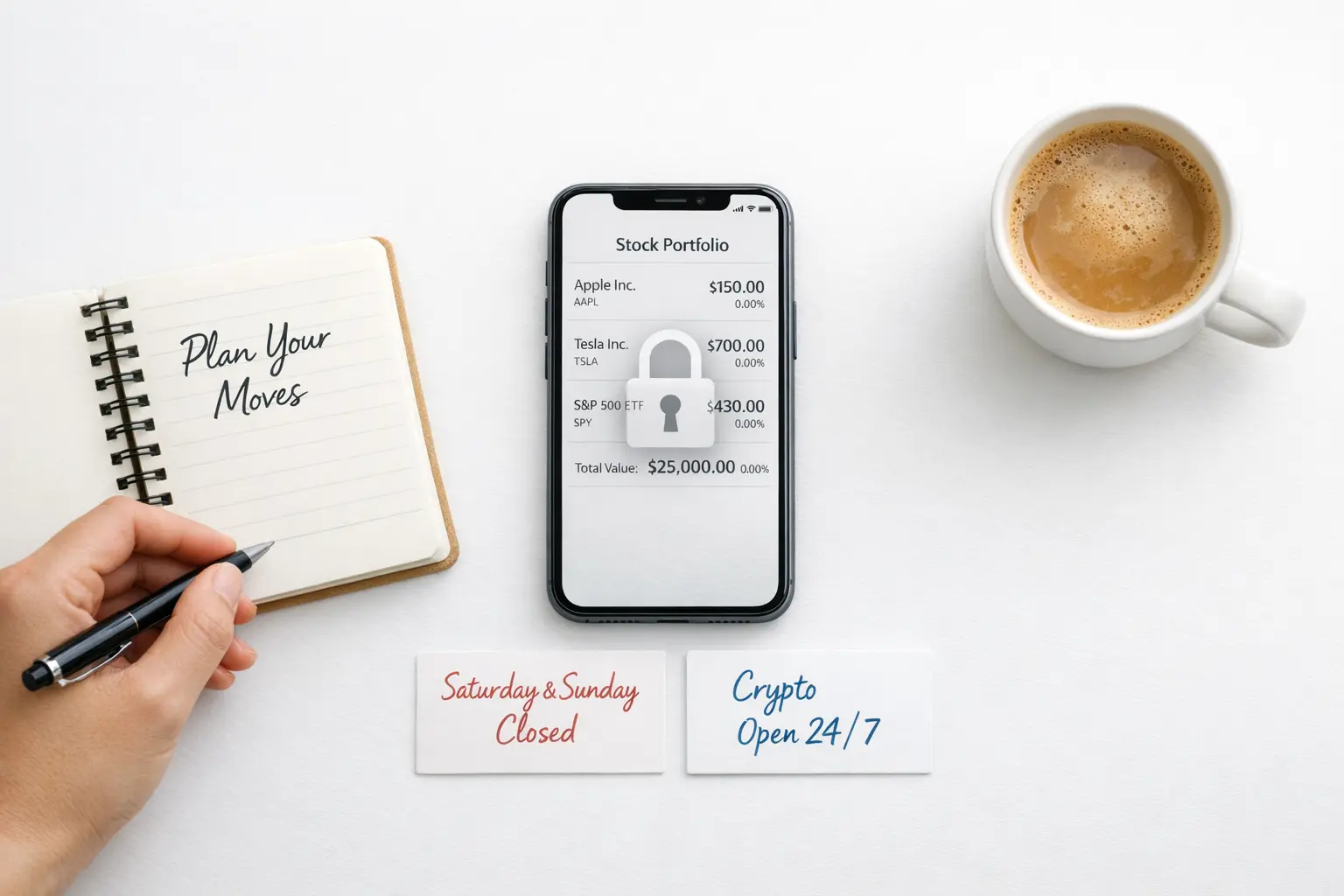
You set an alarm for 9:30 am to catch the opening bell. But the investor who woke up at 4:00 am already made three trades before you even had your coffee. Knowing stock market hours in 2026 is not just useful. It is a genuine competitive advantage.
Introduction: Why Market Hours Matter More Than Most People Think
Timing in investing is everything. Not just which stocks you buy but exactly when you buy them. A stock that opens at $50 at 9:30 am might have been available at $48 in pre-market trading at 7:00 am. That two dollar difference multiplied across hundreds of shares is real money left on the table.
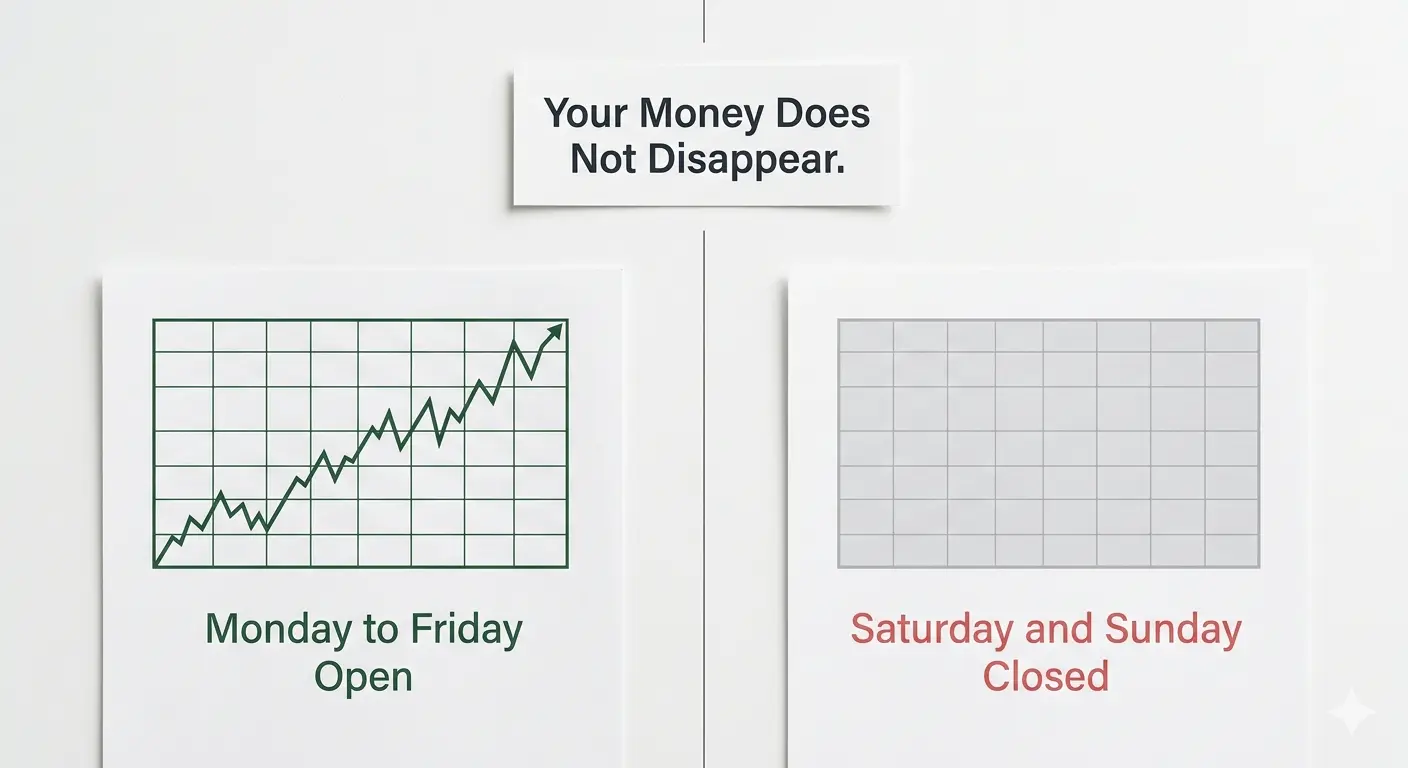
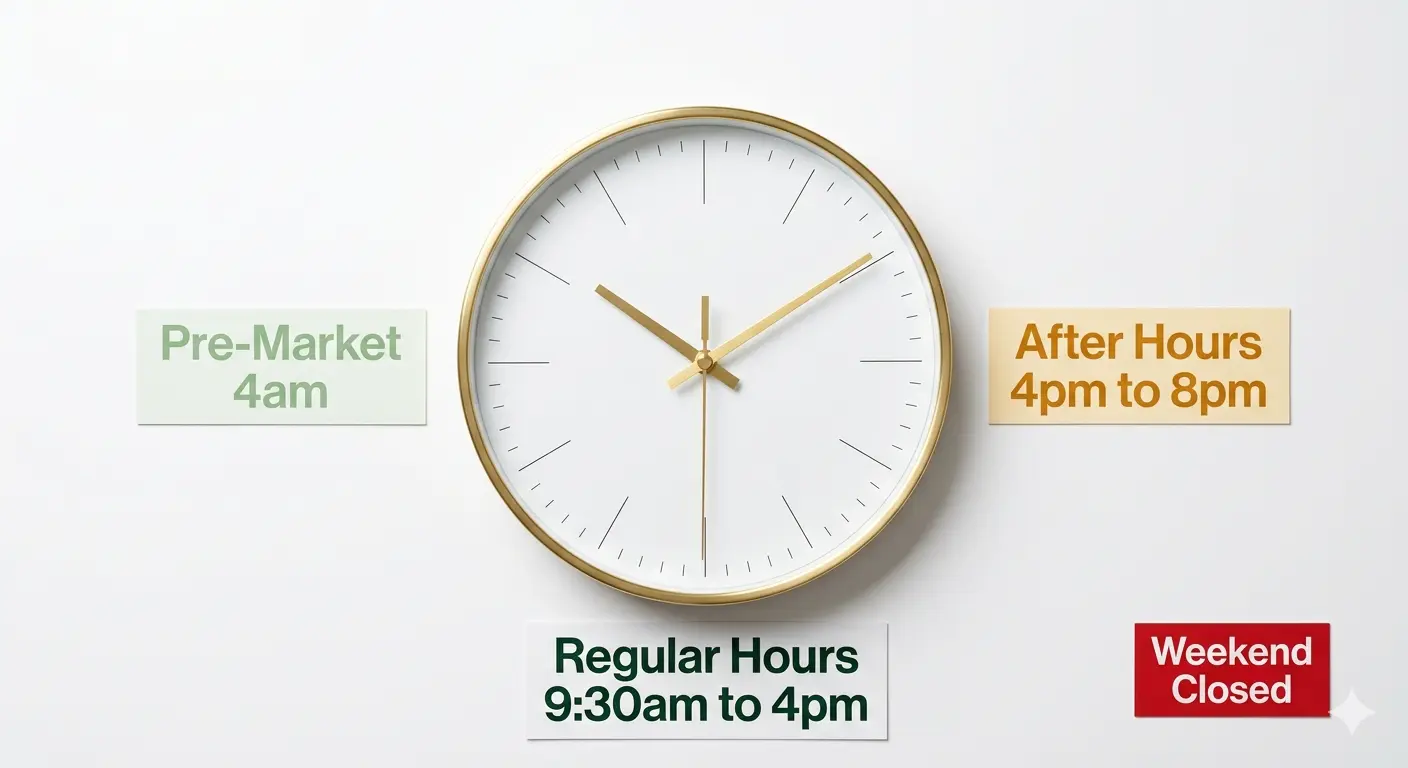
The US stock market opens at 9:30 am Eastern Time and closes at 4:00 pm Eastern Time Monday through Friday. It is closed on the weekends and most but not all federal holidays.
That is the foundation. But the full picture of 2026 trading hours is far more detailed and far more useful.
Regular Trading Hours: The Core Schedule
Both major US exchanges follow the same core schedule every standard trading day.
Nasdaq trading hours are Monday through Friday opening at 9:30 am Eastern Time and closing at 4:00 pm Eastern Time.
The trading hours apply to the New York Stock Exchange and the Nasdaq the two main marketplaces where stocks are listed in the US. People use the terms opening bell and closing bell to describe the beginning and end of the trading day.
Simple. Clean. Consistent. Monday through Friday, 9:30 am to 4:00 pm Eastern Time. That is your core trading window every standard week.
Extended Hours: The Sessions Most Investors Ignore
Here is where serious investors gain an edge over casual ones.
Extended hours trading refers to the periods directly before the stock market officially opens at 9:30 am ET and right after it closes at 4:00 pm ET.
Pre-market trading hours run from 4:00 am to 9:30 am Eastern Time on Nasdaq. After hours trading runs from 4:00 pm to 8:00 pm Eastern Time.
This means the full daily trading window is actually 16 hours long not 6.5 hours. Most casual investors use less than half of it.
But there is a critical warning that every investor must understand before using extended hours.
Extended markets carry risks. The volatility tends to be much higher and there is less liquidity meaning that fewer people are trading and that prices tend to move much more dramatically.
Use extended hours carefully. They reward the prepared and punish the careless.
Complete 2026 Trading Hours Reference Guide
Session | Opening Time ET | Closing Time ET | Days |
|---|---|---|---|
Pre-Market Early | 4:00 am | 9:30 am | Monday to Friday |
Regular Trading | 9:30 am | 4:00 pm | Monday to Friday |
After Hours | 4:00 pm | 8:00 pm | Monday to Friday |
Weekend Trading | Closed | Closed | Saturday and Sunday |
Crypto Markets | Open 24 hours | Open 24 hours | Every day |
2026 Holiday Closures: Every Date You Need to Know
This is where investors get caught off guard every single year. The market does not just close on weekends. It closes for federal holidays too. And in 2026 there are specific dates with unique rules.
The NYSE and the Nasdaq will close for either the full day or at 1:00 pm ET on the following days. If one of these major holidays falls on a weekend the stock exchanges generally close on the Friday before or the Monday after.
The NYSE and Nasdaq typically observe 10 stock market holidays each year.
Here are the most important 2026 specific dates every investor must mark on their calendar:
Independence Day falls on a Saturday in 2026 so the NYSE and Nasdaq will close for the full day on Friday July 3 to observe the holiday.
In 2026 the stock market will close at 1:00 pm on the day after Thanksgiving and on Christmas Eve which both fall on weekdays.
The stock market is open on the Friday after Thanksgiving but its trading session closes early at 1:00 pm Eastern Time. It is one of two or three days annually that the stock market closes before 4:00 pm.
Key 2026 Market Dates at a Glance
Date | Holiday | Market Status |
|---|---|---|
January 19 | Martin Luther King Jr Day | Full Day Closed |
February 16 | Presidents Day | Full Day Closed |
April 3 | Good Friday | Full Day Closed |
May 25 | Memorial Day | Full Day Closed |
June 19 | Juneteenth | Full Day Closed |
July 3 | Independence Day Observed | Full Day Closed |
September 7 | Labor Day | Full Day Closed |
November 26 | Thanksgiving Day | Full Day Closed |
November 27 | Black Friday | Closes Early at 1:00 pm |
December 24 | Christmas Eve | Closes Early at 1:00 pm |
December 25 | Christmas Day | Full Day Closed |
The Holidays That Surprise Most Investors
Two holidays catch investors off guard every single year.
Good Friday
In 2026 the NYSE and Nasdaq are closed on Good Friday April 3. Although the Nasdaq has not released its official holiday schedule beyond 2026 the NYSE has announced it will be closed for Good Friday on March 26 2027 and on April 14 2028.
Most people do not think of Good Friday as a market holiday. But it is a full closure every single year.
Veterans Day
Veterans Day is not a stock market holiday as both the New York Stock Exchange and Nasdaq are open for regular hours. However the bond market does close in observance of Veterans Day.
This is the flip side. Veterans Day feels like it should close the market but it does not. Stocks trade normally. Bonds do not. Know the difference.
A real life observation: An investor placed a large bond trade order on Veterans Day expecting normal execution. The bond market was closed. The order sat unexecuted. By the time it processed the next day prices had moved against them significantly. Knowing the holiday schedule would have completely avoided that loss.
"The investor who knows the calendar always has an advantage over the one who does not."
Unexpected Closures: When the Market Shuts Without Warning
Beyond the scheduled holidays there is one more category every serious investor must understand.
Occasionally stock markets have closed unexpectedly for national tragedies natural disasters and days of mourning. For instance the stock markets closed on January 9 2025 to observe the national day of mourning honoring former US president Jimmy Carter after his death. Markets could close for celebrations too. In July 1969 the stock markets shut to mark the first manned Moon landing.
These closures cannot be predicted. But knowing they can happen means you are never completely blindsided when they do.
"Expect the schedule. But always prepare for the unexpected."
Insight: How to Use Market Hours as a Strategy
Understanding when the market is open is only half the picture. Using that knowledge strategically is where real investing skill develops.
Pre-market hours from 4:00 am to 9:30 am are when institutional investors and professionals react to overnight news. Earnings reports released after 4:00 pm move stocks dramatically in after hours trading. Holiday weeks typically see lower volume which means prices can be more volatile in both directions.
In 2026 the stock market will close at 1:00 pm on the day after Thanksgiving and on Christmas Eve which both fall on weekdays.
Half days like these often see unusual price movements as professional traders close positions before the early shutdown. Understanding this pattern helps you decide whether to trade or stay on the sidelines on those specific days.
Knowing the schedule is not just about avoiding missed trades. It is about finding opportunities that most investors completely overlook.
Conclusion: Mark Your Calendar Right Now
The stock market in 2026 has a clear schedule. Regular hours run from 9:30 am to 4:00 pm Monday through Friday. Extended hours stretch from 4:00 am all the way to 8:00 pm. Eleven official holidays close or shorten the trading day. And unexpected closures can happen at any time.
Regular stock market trading hours are 9:30 am to 4:00 pm Eastern Time Monday through Friday applying on all non-holiday weekdays.
Print this guide. Save it on your phone. Bookmark it on your browser. Because the investors who know exactly when the market operates always make better decisions than the ones who are constantly surprised by closures they never saw coming.
"In investing knowledge of the calendar is knowledge of the opportunity. Never miss a bell you could have predicted."