Introduction: A Month Full of Diversity
April is a time when nature changes and communities celebrate renewal. It is the season of harvest in many regions, and also a time of important religious events.
What makes April special is its diversity.
Different communities celebrate different festivals, but the spirit remains the same. Joy, gratitude, and togetherness.
Types of Festivals Celebrated in April
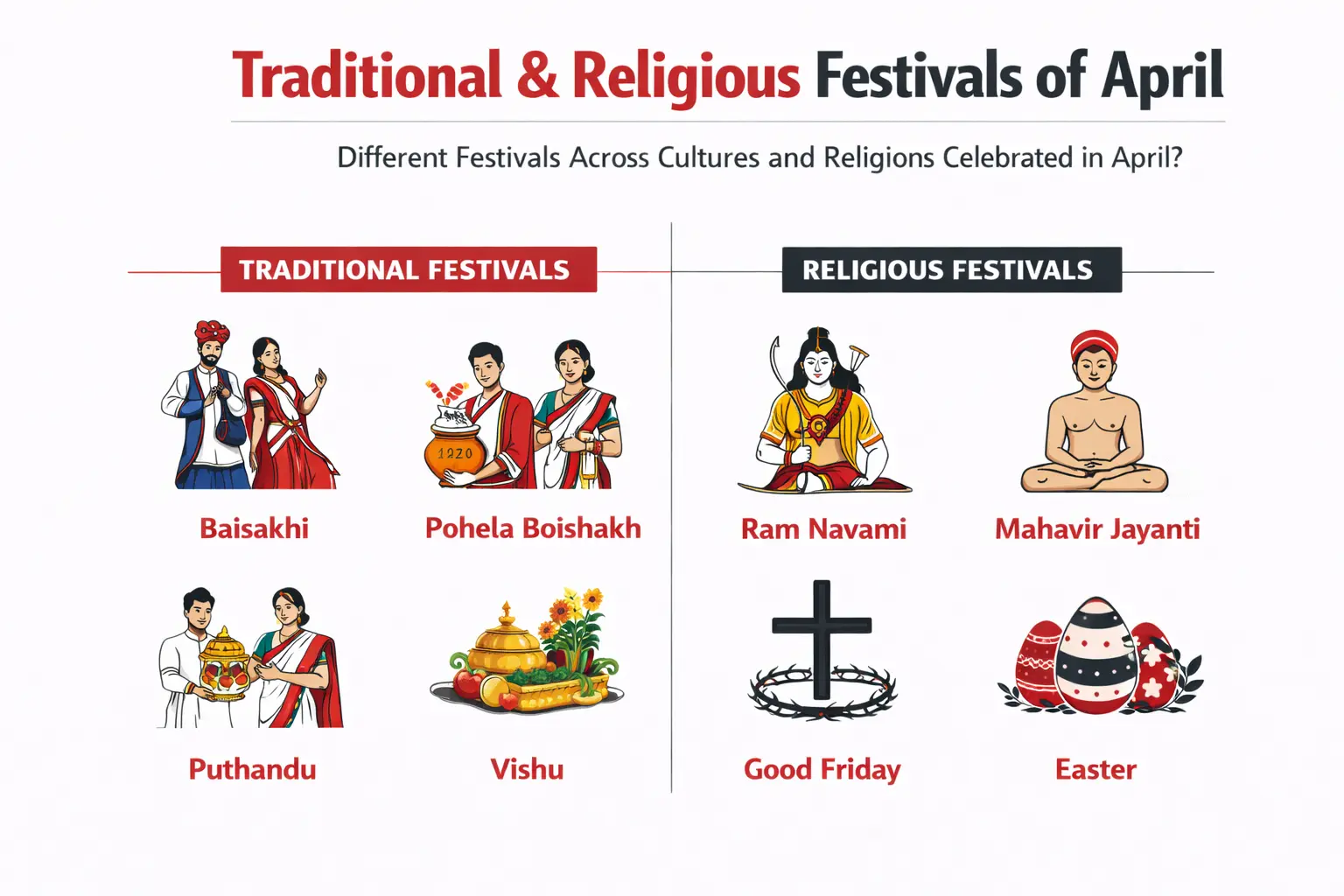
April festivals can be broadly divided into traditional festivals and religious festivals.
1. Traditional Festivals
Traditional festivals are connected to culture, seasons, and local customs. They often celebrate harvest, new year, or regional identity.
Baisakhi
Baisakhi is one of the most popular traditional festivals in North India, especially Punjab. It marks the harvest of crops and is celebrated with dance, music, and fairs. Farmers express gratitude for a good harvest.
Pohela Boishakh
Celebrated in West Bengal, this festival marks the Bengali New Year. People wear traditional clothes, enjoy cultural programs, and start new business accounts.
Puthandu
In Tamil Nadu, Puthandu marks the beginning of a new year. Families decorate homes, prepare special food, and pray for prosperity.
Vishu
Vishu is celebrated in Kerala and symbolizes new beginnings. The day starts with viewing the Vishukkani, which is considered auspicious.
These festivals are rooted in tradition and reflect the cultural richness of India.
2. Religious Festivals
Religious festivals are based on faith, beliefs, and spiritual teachings. They often involve prayers, rituals, and reflection.
Ram Navami
Ram Navami celebrates the birth of Lord Rama. Devotees visit temples, observe fasts, and participate in religious ceremonies.
Mahavir Jayanti
This festival marks the birth of Lord Mahavir, the founder of Jainism. It promotes values like non violence, truth, and compassion.
Good Friday
Good Friday is observed by Christians as a day of prayer and reflection. It marks the crucifixion of Jesus Christ.
Easter
Easter celebrates the resurrection of Jesus Christ. It is a symbol of hope, renewal, and new life.
These festivals focus on spiritual growth and moral values.
Impact: Unity in Diversity
April festivals show how different cultures and religions can exist together in harmony.
People from different backgrounds celebrate their own festivals, yet respect others. Schools, communities, and workplaces often celebrate together, promoting unity.
You may have seen this.
Different festivals being celebrated in the same school within a week.
That is the beauty of diversity.
Conclusion: Celebrating with Meaning
April is not just a month of festivals. It is a celebration of culture, faith, and life.
Traditional festivals connect people to their roots. Religious festivals connect them to their beliefs.
Together, they create a sense of belonging and joy.
Festivals may be different, but the feeling of happiness is the same.
And that is what makes April truly special.