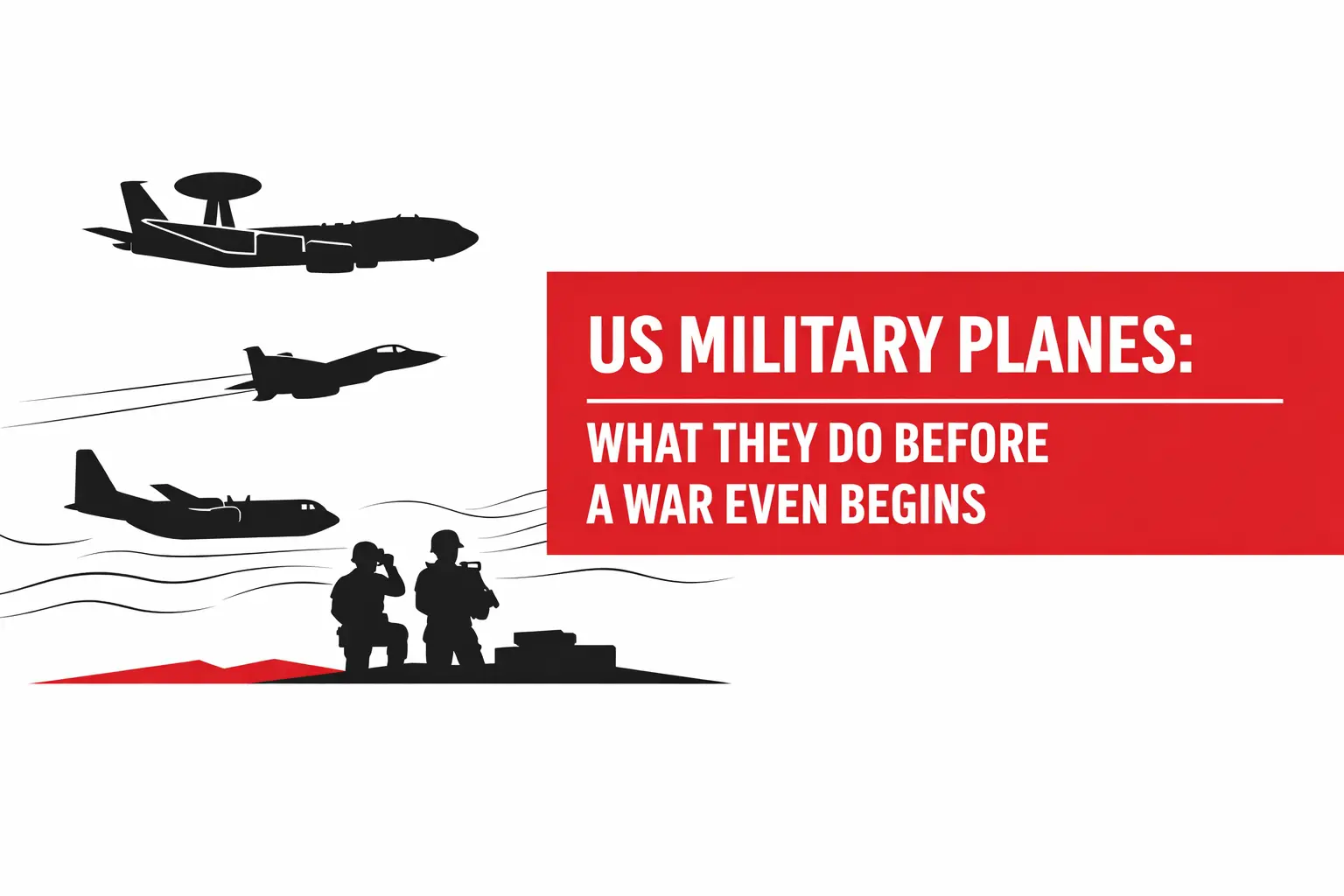
US Military Planes: What They Do Before a War Even Begins
What if the most important part of a war happens before the first shot is fired?
And most people never even notice it.
That’s where US military planes come in.
Introduction
When people think about military aircraft, they imagine dogfights, missiles, and explosions. That’s the visible part.
The real work starts much earlier.
Long before any conflict officially begins, US military planes are already in motion—watching, mapping, tracking, and quietly shaping outcomes.
It’s not dramatic.
But it’s decisive.
Main Explanation
The US military doesn’t wait for war to act. It prepares the battlefield in advance using a mix of aircraft, each with a specific role.
Here’s a simple breakdown:
Aircraft Type | Pre-War Role | What It Achieves |
|---|---|---|
Surveillance Planes | Monitor regions, track movements | Early threat detection |
Drones | Continuous observation, low risk | Real-time intelligence |
Refueling Aircraft | Support long-duration missions | Extends global reach |
Transport Aircraft | Move troops, equipment quietly | Rapid deployment readiness |
Fighter Jets | Patrol and presence missions | Deterrence |
Surveillance aircraft and drones are often the first to move. They scan terrain, identify patterns, and build a clear picture of what’s happening on the ground.
Then comes positioning.
Transport planes move resources closer to potential hotspots. Not loudly. Not publicly. Just enough to be ready.
Refueling aircraft extend how long jets can stay in the air. That changes everything. Distance stops being a limitation.
And fighter jets?
Sometimes they don’t engage at all. They just exist in the airspace.
That alone sends a message.
Impact
This early activity does something powerful—it shapes decisions before conflict begins.
Countries adjust. Movements slow down. Plans get reconsidered.
Without a single strike.
A coordinated air presence creates pressure. Not visible pressure, but real enough to influence outcomes.
“The smartest battles are the ones that never happen.”
“Preparation in silence creates control in chaos.”
“Power isn’t always loud. Sometimes it just stays ready.”
Real-Life Observation
You’ve probably seen clips of fighter jets flying over cities during drills or exercises.
People record it. It looks impressive.
But here’s the thing.
Those flights are not just for show.
They’re signals.
A reminder that capability exists, even if it’s not being used.
Trend: Then vs Now
The role of US military planes before war has changed a lot over time.
Earlier Approach | Modern Approach |
|---|---|
React after conflict | Prepare before conflict |
Heavy troop buildup | Strategic positioning |
Limited intelligence | Real-time data and surveillance |
Short-range operations | Global reach with refueling |
In the past, wars often started before full preparation. Today, preparation itself can prevent escalation.
Technology plays a huge role here. Drones, satellite-linked aircraft, and advanced radar systems allow constant monitoring.
It’s no longer about reacting fast.
It’s about already knowing.
Insight
Here’s the part most people miss.
US military planes are not just war tools. They are decision tools.
They help leaders understand risks, apply pressure, and control timing.
Sometimes, just having aircraft in the right place changes the entire situation.
No missiles needed.
That’s a different kind of power.
Conclusion
So what do US military planes do before a war even begins?
They observe.
They position.
They influence.
Quietly.
The real shift in modern warfare isn’t just better weapons. It’s better preparation.
And most of it happens far above, out of sight.
That’s where the outcome often gets decided.
Before anything officially starts.