⛽ Why India Feels the Impact First
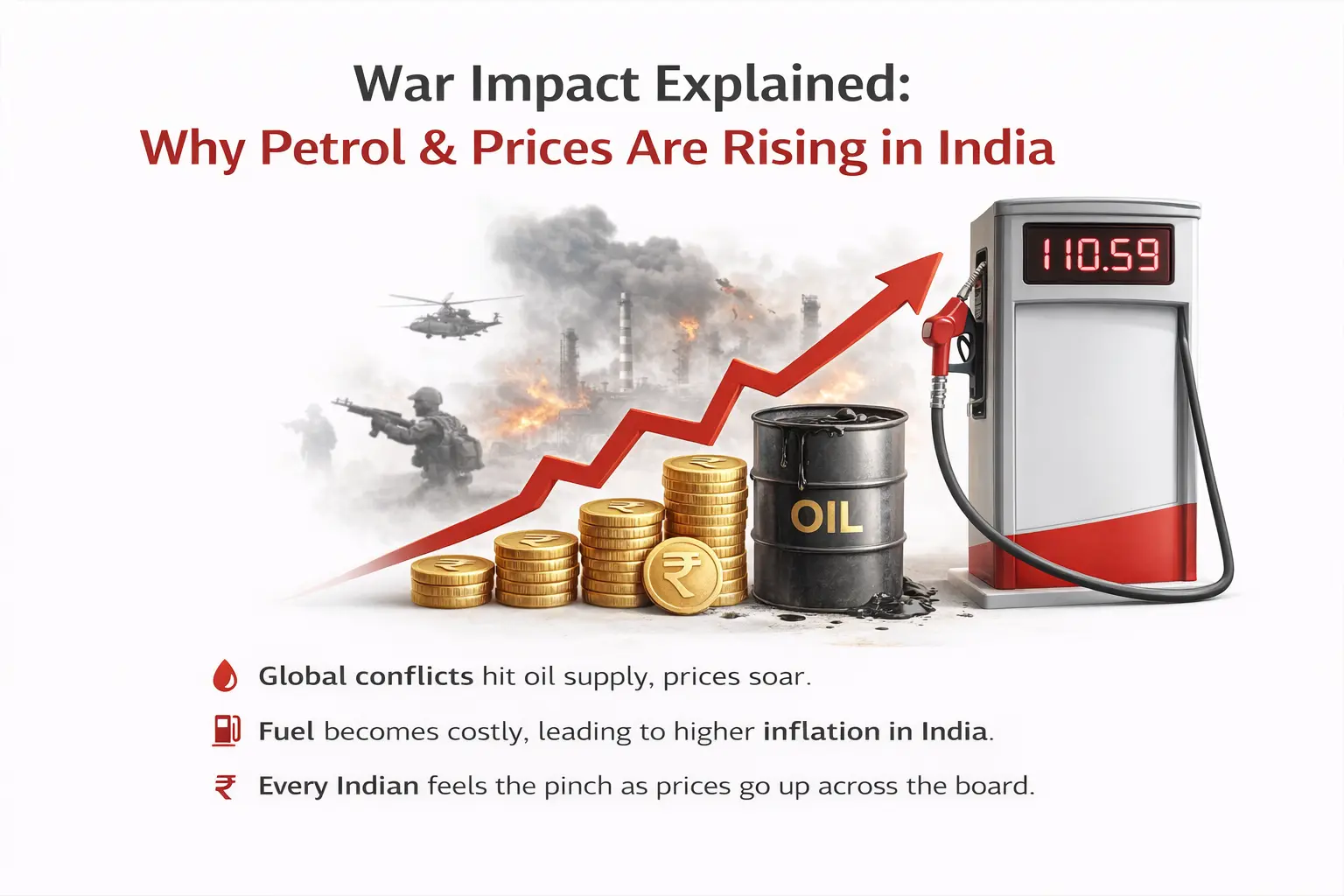
India is heavily dependent on imported oil, with over 80% of its fuel needs coming from abroad.
This means when global crude prices increase:
India has to pay more in dollars
The overall import bill rises
Fuel companies increase retail prices
Even small global changes quickly reflect at Indian petrol pumps.
💸 The Chain Reaction Across the Economy
Fuel is not just a commodity — it powers the entire economy.
When petrol and diesel prices rise:
Transportation becomes expensive
Goods and services cost more
Food prices increase due to higher logistics costs
This creates a ripple effect where almost every sector experiences price hikes.
📈 Inflation: The Hidden Effect
Rising fuel costs directly contribute to inflation.
As prices increase:
Household expenses grow
Purchasing power declines
Savings lose value over time
This is why even people who don’t drive regularly still feel the burden of rising fuel prices.
🏦 Government & Policy Response
To control rising costs, the government and financial institutions may:
Reduce fuel taxes temporarily
Release oil from strategic reserves
Adjust interest rates to control inflation
However, these measures can only provide short-term relief if global tensions continue.
🔮 What Happens Next?
If geopolitical tensions persist:
Petrol and diesel prices may remain high
Inflation could stay elevated
Economic pressure on households will increase
If the situation stabilizes, prices may gradually come down, but not immediately.
⚡ Final Takeaway
Global wars are no longer distant headlines — they directly impact everyday life in India.
From fuel prices to grocery bills, everything is interconnected.
In today’s economy, global conflict doesn’t just stay on the battlefield — it reaches your wallet.
⛽ Why India Feels the Impact First
India is heavily dependent on imported oil, with over 80% of its fuel needs coming from abroad.
This means when global crude prices increase:
India has to pay more in dollars The overall import bill rises Fuel companies increase retail prices
Even small global changes quickly reflect at Indian petrol pumps.
💸 The Chain Reaction Across the Economy
Fuel is not just a commodity — it powers the entire economy.
When petrol and diesel prices rise:
Transportation becomes expensive Goods and services cost more Food prices increase due to higher logistics costs
This creates a ripple effect where almost every sector experiences price hikes.
📈 Inflation: The Hidden Effect
Rising fuel costs directly contribute to inflation.
As prices increase:
Household expenses grow Purchasing power declines Savings lose value over time
This is why even people who don’t drive regularly still feel the burden of rising fuel prices.
🏦 Government & Policy Response
To control rising costs, the government and financial institutions may:
Reduce fuel taxes temporarily Release oil from strategic reserves Adjust interest rates to control inflation
However, these measures can only provide short-term relief if global tensions continue.
🔮 What Happens Next?
If geopolitical tensions persist:
Petrol and diesel prices may remain high Inflation could stay elevated Economic pressure on households will increase
If the situation stabilizes, prices may gradually come down, but not immediately.
⚡ Final Takeaway
Global wars are no longer distant headlines — they directly impact everyday life in India.
From fuel prices to grocery bills, everything is interconnected.
In today’s economy, global conflict doesn’t just stay on the battlefield — it reaches your wallet.