Digital Arrest Scam The New Online Fraud Trapping Innocent People
What would you do if a police officer called you and said you were under arrest right now.
What if they knew your name your address and even your ID details.
Would you panic. Most people do.
That is exactly what scammers are counting on.
The digital arrest scam is one of the fastest growing cyber fraud trends today. It is silent. It is psychological. And it is extremely dangerous. People are losing their savings not because they are careless but because they are scared.
This is not just another online fraud. This is manipulation at a deeper level.
The digital arrest scam works on a simple idea. Fear creates obedience.
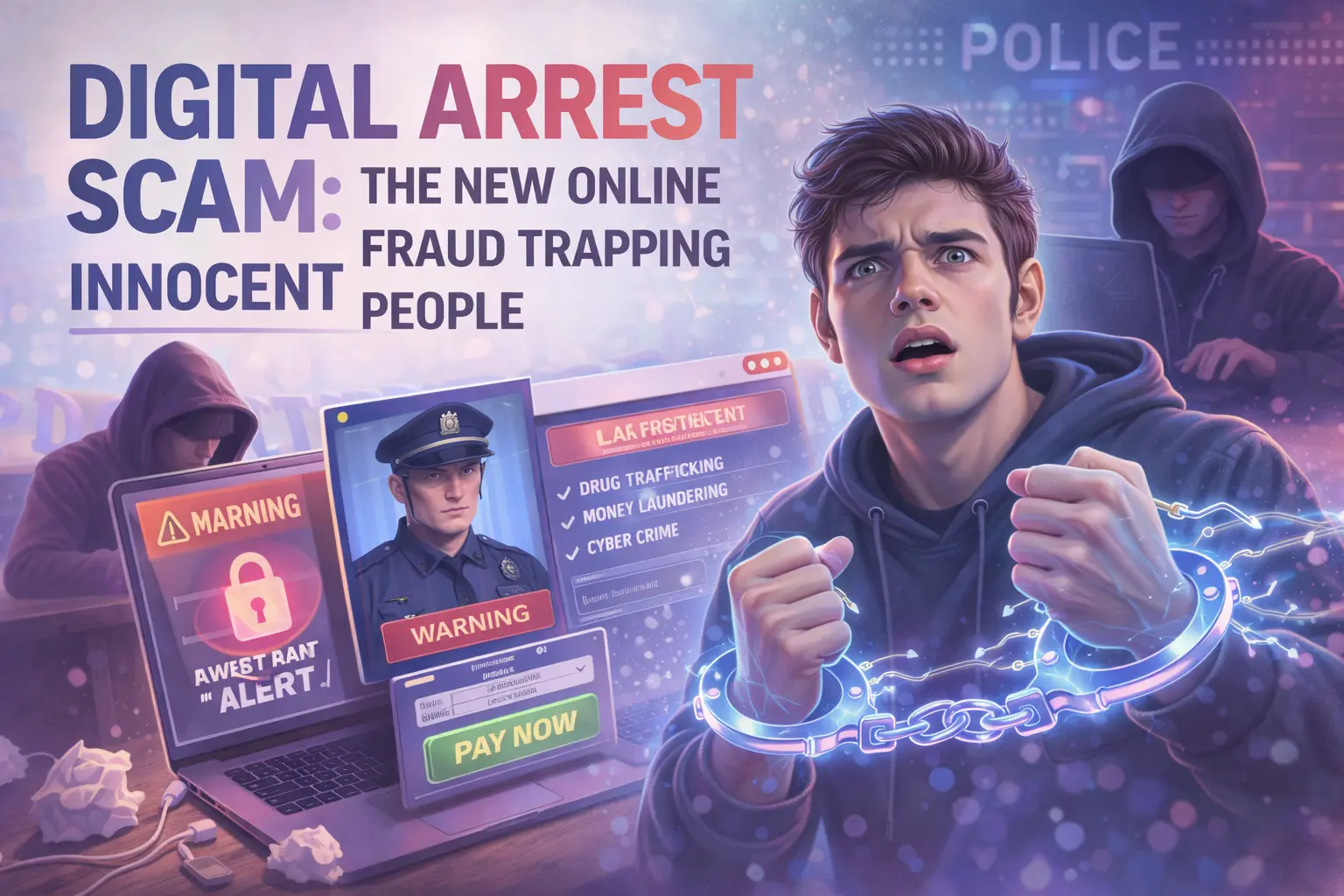
Scammers pretend to be police officers government officials or cybercrime authorities. They contact victims through phone calls video calls or messaging apps. They often use official sounding language and fake documents to make their story believable.
They tell the victim that their identity has been linked to a serious crime. This could be money laundering drug trafficking or cybercrime. The victim is told that an arrest warrant has been issued.
Then comes the pressure.
The scammer may say that the case is confidential and cannot be shared with anyone. They may force the victim to stay on a call for hours. Sometimes they even ask the victim to switch on their camera to create a sense of surveillance.
The goal is simple. Break the victim mentally before asking for money.
Once the fear is strong enough the scammer offers a way out. Pay a certain amount immediately and the case will be resolved quietly.
And many people pay.
Why is this happening now.
Because our lives have become digital but our awareness has not kept up.
Personal data is easily available online. Names phone numbers and even identity details can be accessed or leaked. Scammers use this information to sound convincing.
At the same time people trust authority. When someone claims to be from the police or a government agency the instinct is to obey not question.
Combine data access with authority pressure and you get a powerful scam model.
Also technology has made impersonation easier. Fake caller IDs official looking documents and even deepfake video calls are now possible.
The scam feels real because it looks real.
The impact of digital arrest scams goes far beyond money.
Financial loss is just the beginning. Some victims lose their life savings within hours. Retired individuals who spent decades building security suddenly find themselves with nothing.
But the emotional damage is deeper.
Victims often experience shame guilt and anxiety. They blame themselves for being fooled. Many do not even report the crime because they feel embarrassed.
Families are affected. Trust is broken. Confidence is shaken.
A young professional once received such a call during office hours. Within three hours he had transferred a large amount of money. He later said he did not even think clearly. He was only trying to avoid arrest.
That is the power of fear.
Here is the uncomfortable truth.
People are not getting scammed because they are foolish. They are getting scammed because they are human.
Fear overrides logic.
When someone believes their freedom is at risk they stop analyzing. They react.
And scammers understand this very well.
They do not hack systems. They hack emotions.
One line says it all.
The smarter the scam the less it looks like a scam.
There is also a pattern that is hard to ignore.
Earlier scams were based on greed. Lottery wins prize money investment returns.
Now scams are based on fear. Legal threats arrests and identity misuse.
This shift is important.
Fear based scams are more effective because people act faster. They do not verify. They do not pause. They just comply.
And in the digital world speed is everything.
Money can disappear in seconds.
Let us look at a relatable moment.
You receive a call from an unknown number. The voice is serious and confident. They say your bank account is under investigation. They mention your ID number.
Your heart rate increases.
You try to recall if you did something wrong.
In that moment you are not thinking about scams. You are thinking about consequences.
That is where the trap closes.
So what can be done.
Awareness is the first defense.
No legitimate authority will ask for money over a call to avoid arrest. No police officer will conduct an investigation only through video calls. And no legal process works in secrecy where you cannot inform your family or lawyer.
If someone pressures you to act immediately that itself is a warning sign.
Pause. Verify. Disconnect.
Talk to someone you trust.
Even a few minutes of delay can save everything.
There is also a need for systemic change.
Authorities must actively educate citizens about such scams. Banks and digital platforms should introduce stronger fraud alerts. Telecom systems should detect and flag suspicious calls.
Technology created this problem. It must also be part of the solution.
But individual awareness will always be the strongest shield.
Here is a powerful reality.
Scammers do not need everyone to believe them. They only need a few.
And those few are enough to keep the system running.
This is why these scams continue to grow.
Because they work.
Another important insight is about trust.
Digital arrest scams are slowly eroding trust in real institutions. When people hear stories like this they begin to doubt genuine calls from authorities.
This creates a dangerous gap.
When trust breaks society becomes more vulnerable.
Let us not ignore the psychological angle.
Continuous exposure to such threats increases general anxiety. People become more suspicious more stressed and more reactive.
This is not just a cyber issue. It is a mental health issue.
And it is growing quietly.
One line captures the entire situation.
Fear is the new currency of online fraud.
Another truth worth remembering.
If someone rushes you they are trying to control you.
And one more that should stay with you.
Real authority does not panic you into paying.
Looking ahead the problem may get worse before it gets better.
As technology evolves scams will become more sophisticated. Deepfake voices realistic video impersonation and AI driven conversations will make detection harder.
The line between real and fake will blur even more.
Which means awareness will not be optional. It will be essential.
Conclusion
The digital arrest scam is not just about money. It is about control. It is about using fear to override logic and force decisions.
It is a reminder that in the digital age information is power but emotion is vulnerability.
People do not lose money because they trust too much. They lose it because they are made to fear too much.
And until we learn to pause question and verify this invisible trap will keep catching innocent lives.
Because the most dangerous scams are not the ones that look fake.
They are the ones that feel real.