Could Tesla Lose Its EV Market Dominance?
For years, Tesla felt untouchable.
It led the electric vehicle revolution, dominated headlines, and became one of the most talked-about companies in the world.
But now a growing question is spreading across investor discussions and online searches:
Could Tesla actually lose its dominance in the EV market?
That question is creating intense attention around TSLA and the future of the electric vehicle industry itself.
Why Investors Are Asking This Now
The EV market is changing rapidly.
When Tesla first surged in popularity, competition was limited.
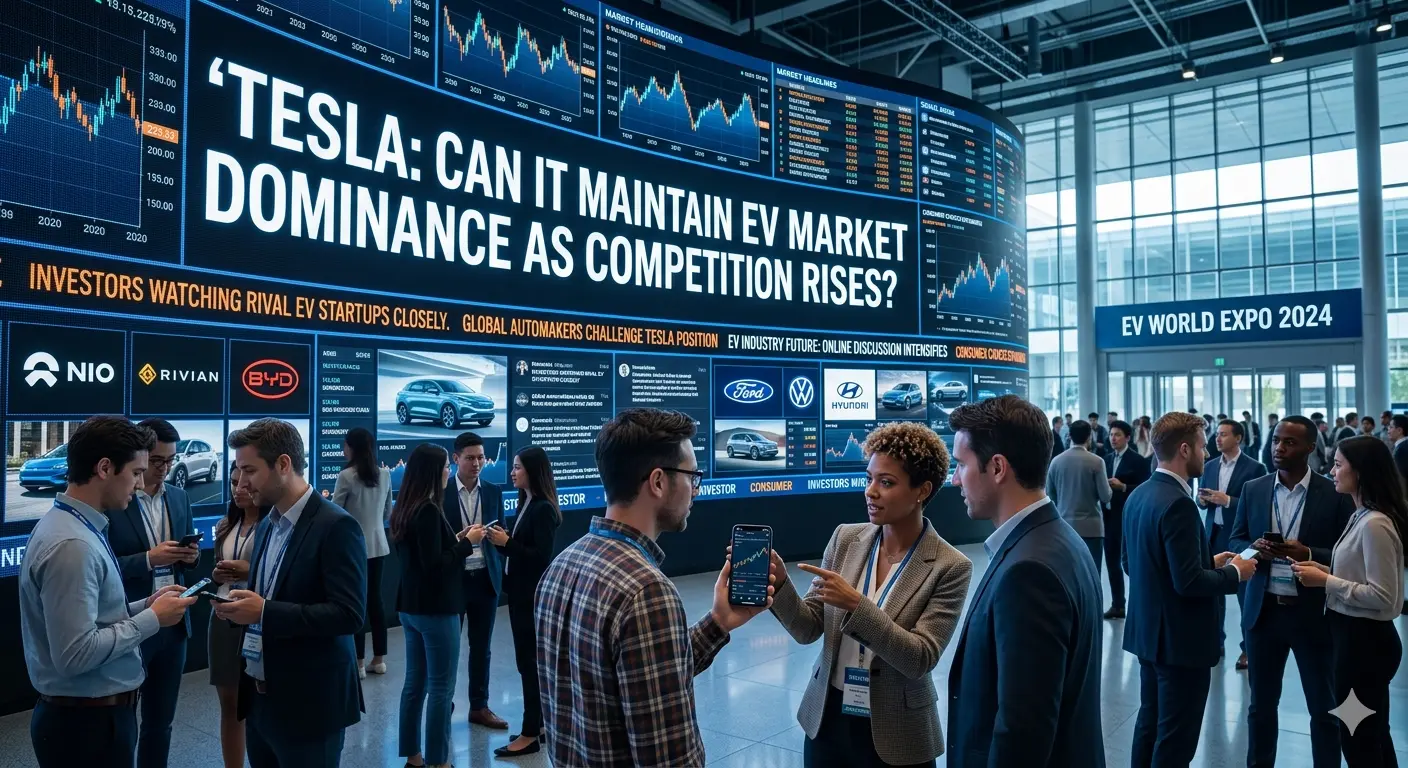
Now major automakers and newer EV companies are aggressively entering the market with their own electric vehicles and advanced technology strategies.
That shift is making investors nervous.
People are beginning to ask:
Can Tesla stay ahead?
Will competition reduce Tesla’s influence?
Has the EV market become too crowded?
Those concerns are spreading quickly online.
The Pressure Facing Tesla
Tesla still holds enormous influence.
But dominance becomes harder to maintain once industries mature.
As more companies compete for market share, pressure increases around:
pricing
innovation
production
customer loyalty
That creates a difficult environment even for industry leaders.
And investors know it.
Why Competition Matters So Much
Consumers now have more choices than ever before.
Electric vehicles are no longer viewed as niche products.
Traditional automakers are investing heavily in EV technology while newer companies continue pushing innovation aggressively.
That competition changes expectations.
Consumers compare brands more carefully.
And investors pay attention to every shift.
The Emotional Side of Tesla’s Popularity
Tesla is not just a company for many investors.
It became a symbol.
A symbol of innovation, disruption, and future technology.
That emotional connection explains why discussions around Tesla dominance create such powerful reactions online.
When belief weakens, anxiety grows quickly.
The Bigger Shift in the EV Industry
Something important is happening globally.
Electric vehicles are becoming mainstream.
That growth means the industry may eventually depend less on one dominant company and more on broader competition across multiple brands.
For consumers, that could create:
better pricing
more innovation
increased options
But for investors, it creates uncertainty.
Insight
Here’s the reality:
“Industries become most competitive after they prove they can succeed.”
Tesla helped prove electric vehicles could become mainstream.
Now competitors want a share of that future too.
A Real-World Observation
Watch how consumers discuss EVs today compared to a few years ago.
People no longer ask whether electric vehicles matter.
Now they ask which company will win.
That shift changes everything.
Powerful Lines
“Success attracts competition faster than failure.”
“Market dominance becomes harder once industries mature.”
“Tesla changed the EV industry—but now the industry is changing around Tesla.”
Conclusion
Questions about Tesla’s future dominance are growing because the electric vehicle market is entering a new phase of competition and uncertainty.
Tesla still holds enormous influence.
But as rivals grow stronger—
the future of EV leadership suddenly feels far less predictable.